Solid Wood vs. Galvanized Steel Safari Tent Frames: A Head-to-Head Decision Guide for Resorts
Short answer: Stars Glamping offers both a finish anti-corrosion solid wood frame and a heavy-duty galvanized steel frame on the same Safari Tent range — Safari Tent - Epic, Safari Tent - Vega and Safari Tent - Lodestar — and both options are published against one shared set of envelope specifications: 850g/m² PVC-coated polyester cover, breathable Oxford canvas lining, ≥3000mm H₂O waterproof rating, B1 fire-retardant rating, wind resistance up to 100km/h (Level 9 wind), 60kg/m² snow load, -25°C to +60°C operating range and an 8–12 year service life. The frame choice is therefore not a contest over which envelope performs better. It is a site-and-operations question: which frame can be inspected, maintained, assembled and documented in the conditions your lodge will actually run in.
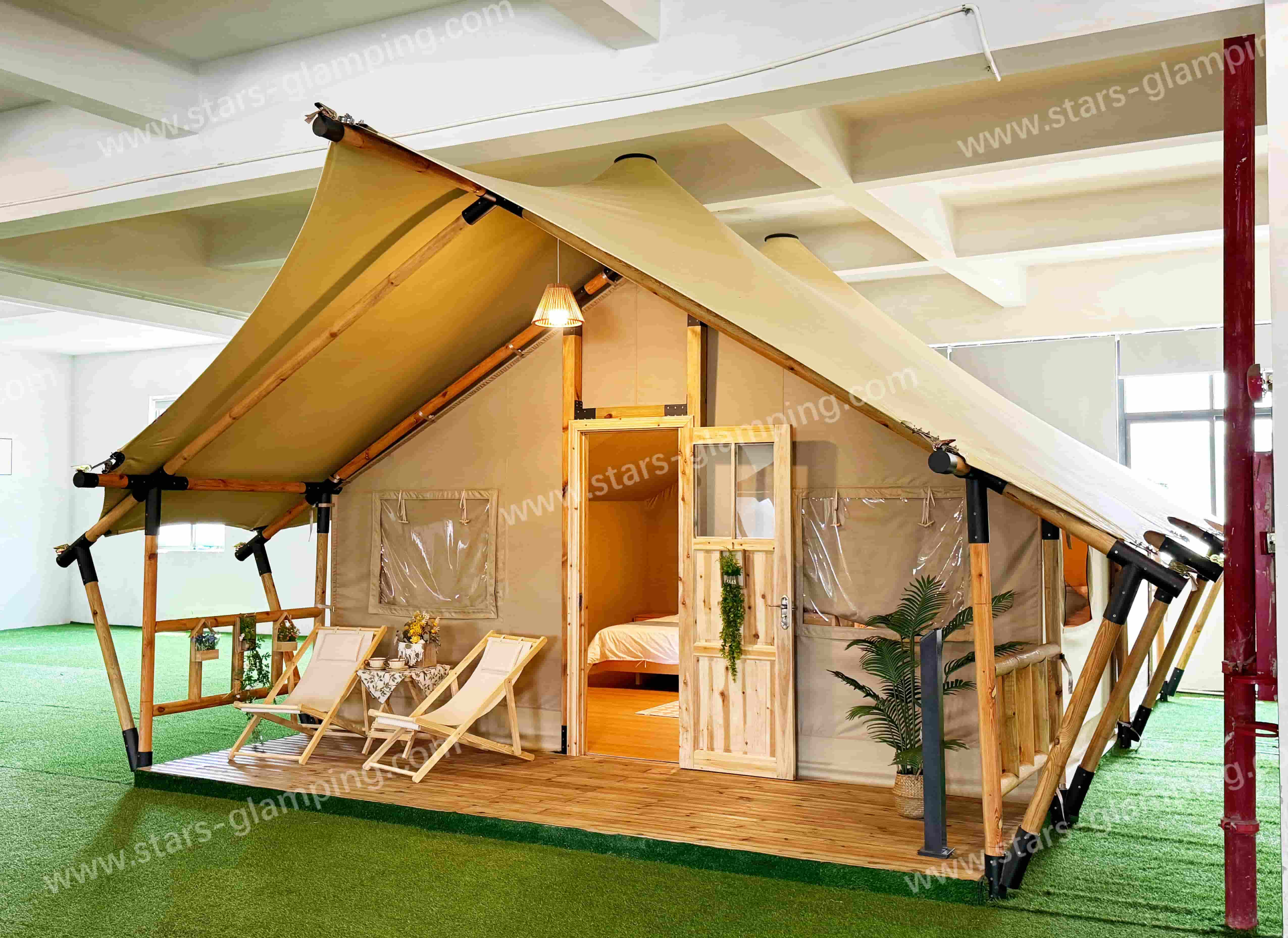
A resort that gets the fabric right and the frame wrong inherits a decade of small problems: fixing points that work loose, a finish that needs re-doing in a season it cannot spare, or a structural detail nobody can inspect because it was closed up during installation. That is why the frame deserves its own decision step rather than being treated as a line under “structure”.
This guide is written for resort, lodge and eco-camp buyers at the research stage — people who already know they need canvas lodge accommodation and now have to specify it. It separates what stays the same across both frame options from what genuinely changes, then sets out the checks that prevent a costly frame decision.
Why the Frame Is the Decision You Cannot Reverse Later
The cover is the part every buyer inspects on a site visit. The frame is the part that decides what the cover can do. Frame members define the roof span, the position of every fixing point, the way the envelope is tensioned and the path by which wind and snow loads reach the foundation. Change the frame after the foundations are poured and you are re-engineering a structure, not swapping a component.
Three consequences follow for anyone comparing solid wood against galvanized steel:
- Geometry is locked early. The size class — 20㎡, 30㎡, 40㎡ or 50㎡ — and the frame option are decided together, because the frame carries the longer spans and the connection details that come with them.
- Maintenance becomes a schedule, not an event. Both options need inspection, but they need different kinds of inspection. The published 8–12 year service life is reached through that schedule, not around it.
- Site labour follows the material. A frame that can be adjusted with carpentry tools and a frame that arrives with factory-formed connections require different assembly plans, tools and supervision — especially on remote, off-grid sites.
Industry Background: Why Buyers Are Asking Harder Frame Questions
Safari-style accommodation is no longer a niche experiment. Grand View Research projects the global safari tourism market growing from USD 39.7 billion in 2026 to USD 66.9 billion by 2033 (Safari Tourism Market Size And Share Report, 2026–2033). That forecast measures tourism revenue, not tent procurement, so it should be read as context for investment confidence rather than as a demand guarantee for any single property.
What it does explain is the shift in specification behaviour. More lodges are being planned for savannah, high-UV, heavy-rain, windy, remote and off-grid locations — the exact conditions in which a frame decision shows up in year three rather than year one. In those settings the question is rarely “wood or steel in the abstract”; it is which of the two can be inspected and maintained by the team that will actually be on site.
What the Two Frame Options Actually Are
Finish anti-corrosion solid wood
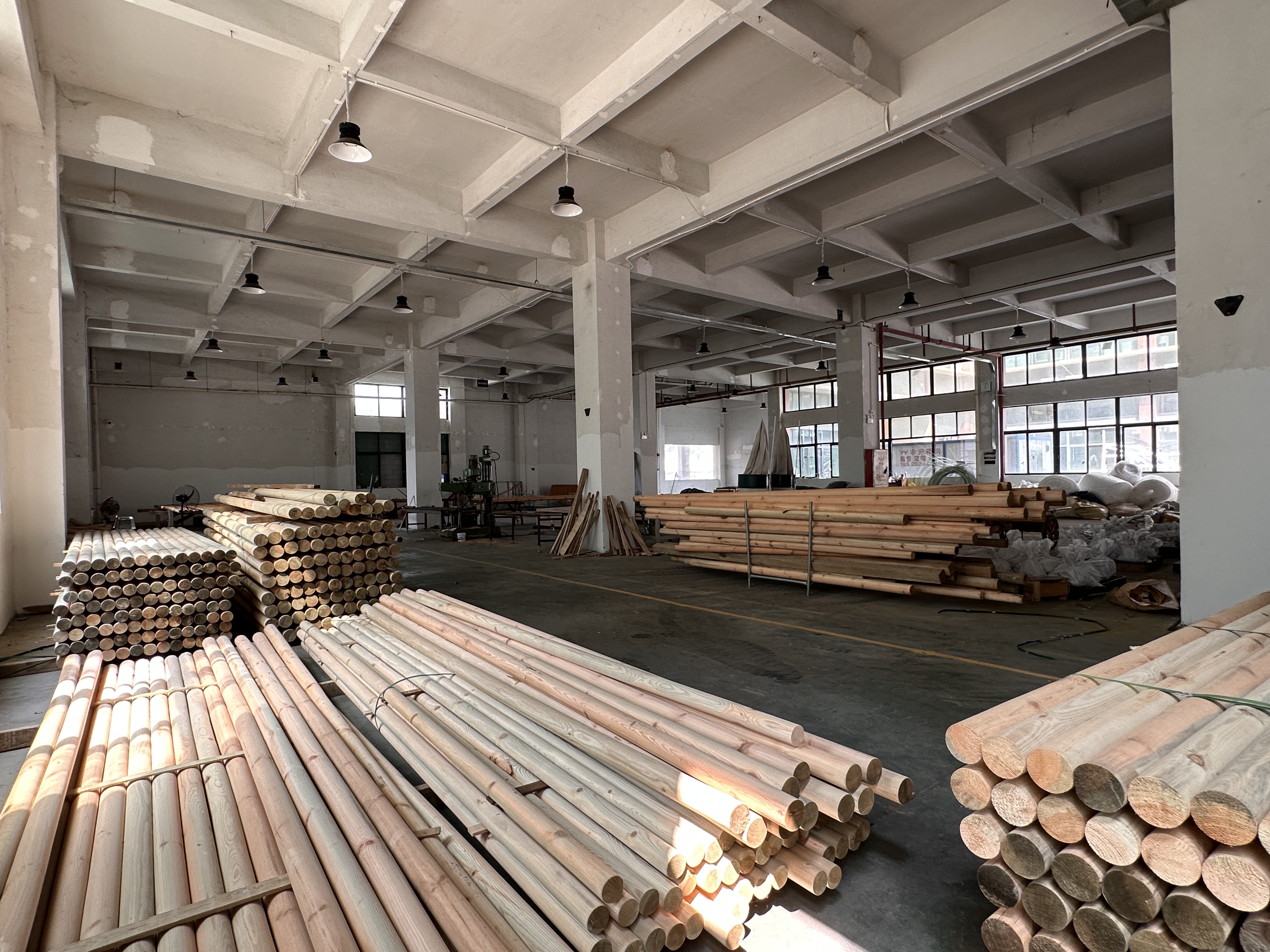
This option uses solid timber members protected by an anti-corrosion finish, and it is the natural fit with the range’s wood-style structure design. Its practical strengths are workability and renewability: timber can be cut, fitted and re-finished with ordinary carpentry tools, and a damaged finish can be repaired on site rather than replaced. Its practical limit is that the finish is the protection. Joints, end grain and any point close to ground contact are where a timber frame degrades first, and on high-UV or heavy-rain sites re-finishing becomes a scheduled maintenance item that has to be resourced, not an occasional repair.
Heavy-duty galvanized steel
This option uses steel members with galvanizing for corrosion protection and factory-formed connections. Its practical strengths are dimensional consistency and predictable assembly: components arrive to fixed geometry and go together in a defined sequence. Its practical limit is that coating integrity is the inspection point — cut ends, welds and abrasion from transport or site handling are where galvanized steel needs checking and touching up. Because members arrive pre-formed, the scope for on-site adjustment is narrower, so the handling and access plan must be settled before delivery rather than during installation.
Neither description is a verdict. The same range carries both options because the right answer depends on the site, the maintenance model and the visual brief — not on a universal ranking of two materials.
Shared Specifications: What Does Not Change With the Frame
The published Safari Tent specification lists one envelope and one set of performance figures across the Epic, Vega and Lodestar models, with the frame offered as an option. Buyers should treat the following as the baseline both options are quoted against — then confirm it in writing for the exact model, size and frame being purchased.
| Specification | Published value (Safari Tent range) | What it means for the frame decision |
|---|---|---|
| Outer cover | 850g/m² PVC-coated polyester fabric | The cover is tensioned on the frame; both options are specified against the same cover, so cover tension is not a differentiator between them. |
| Inner lining | Oxford canvas fabric (breathable) | Lining fixings attach to the frame — confirm the fixing detail for the option you choose, particularly around windows and mesh screens. |
| Waterproof rating | ≥3000mm H₂O | An envelope figure. Frame detailing at penetrations and joints must not compromise it. |
| UV protection | UV-resistant, anti-fading | Relevant to the wood finish as much as to the fabric — ask how the finish itself resists UV. |
| Fire rating | B1 fire-retardant | Part of the tent specification; it is not a frame-only certificate and should be quoted with its scope. |
| Wind resistance | Up to 100km/h (Level 9 wind) | A structural figure — confirm it applies to your chosen frame at your chosen size. |
| Snow load | 60kg/m² | Confirm the same value for the frame option and roof configuration quoted, and check it against local requirements. |
| Temperature resistance | -25°C to +60°C | Sets the operating window; finish and coating performance should be confirmed within it. |
| Service life | 8–12 years | Reached through inspection and repair — and the repair tasks differ by frame. |
| Standard sizes | 20㎡ / 30㎡ / 40㎡ / 50㎡ (customizable) | Larger footprints carry longer spans and more connections to verify, whichever frame is chosen. |
| Features | Large panoramic windows, mesh screens, wood-style structure design | Ask how the wood-style appearance is achieved when the structural frame is steel. |
Head-to-Head: Where the Two Frames Actually Differ
Once the envelope specification is set aside, five criteria decide the choice. The comparison below is qualitative on purpose: the published specification does not include frame-specific test values, so any supplier claiming a frame-level advantage should be asked to document it.
| Decision criterion | Finish anti-corrosion solid wood | Heavy-duty galvanized steel |
|---|---|---|
| Corrosion strategy | An applied anti-corrosion finish acts as the barrier; it can be renewed when it degrades. | Galvanizing protects the steel; the check points are cut ends, welds and transport abrasion. |
| On-site workability | Members can be cut, fitted and re-finished with carpentry tools if site conditions demand it. | Connections are factory-formed; site work is mostly assembly and touch-up rather than shaping. |
| Maintenance emphasis | Periodic inspection and re-finishing of exposed timber, especially at joints and near ground contact. | Periodic inspection for coating damage and moisture traps; no timber re-finishing cycle on the member itself. |
| Visual character | Wood grain and tone, consistent with the range’s wood-style structure design. | Steel members; confirm how visible frame elements are finished if a timber appearance is part of the brief. |
| Assembly and handling plan | Member weights, pack sizes and tool needs differ from steel — plan for the access your site actually has. | Confirm lifting and handling arrangements for remote or vehicle-restricted sites before delivery. |
Matching the Frame to Your Site and Operating Model
Frame decisions go wrong when they are made on appearance alone. The four site profiles below are the ones most resort buyers are working with; each changes which frame risks matter more.
Desert camp and high-UV sites
High ultraviolet exposure attacks coatings before it attacks structure. On a solid wood frame, the finish is the element most exposed, so the questions are how the finish system is specified and how re-finishing is scheduled around occupancy. On a galvanized steel frame, the parallel question is whether coating damage from sand abrasion or handling will be inspected on a routine rather than on complaint. In both cases, ask what the inspection interval should be and who performs it.
Jungle and riverside lodges
Heavy rain and sustained humidity put the emphasis on water shedding and drying, not on the frame material alone. Confirm how the frame details at the wall-to-floor junction, how penetrations for the bathroom module, kitchen point and electrical services are sealed, and where water can stand. Timber frames need their finish intact at exactly those junctions; steel frames need coating integrity checked where moisture can be trapped against the member.
Mountain and winter operations
Snow load is the governing figure here, and the published 60kg/m² should be confirmed for the frame option and roof configuration you are actually buying, then checked against local requirements for the site. The -25°C to +60°C operating range covers cold-weather use, and an insulated safari tent for winter will normally pair the frame with insulation lining, an air conditioning system and wooden flooring. Insulation and interior linings add fixings to the frame — a detail worth agreeing before production, not on site.
Eco resorts and wildlife camps
Where the accommodation is meant to read as a canvas lodge rather than a building, the solid wood frame usually carries the visual argument, and the wood-style structure design is a listed feature of the range. If sustainability is part of the brand promise, ask for the documents behind it — timber treatment and finish specification, and how the frame is maintained over its service life. Galvanized steel, meanwhile, suits operators who want a maintenance routine built around inspection and touch-up rather than surface renewal, particularly where skilled finishing labour is hard to keep on a remote site.
Across all four profiles the same rule applies: decide the maintenance model first, then the frame. A frame whose upkeep your team cannot deliver is the wrong frame, whatever it looks like on opening day.
Frame Choice Across 20㎡, 30㎡, 40㎡ and 50㎡ Sizes
Size and frame are specified together, because a larger footprint changes spans, connection counts and the amount of structure a maintenance team has to reach.
- 20㎡: the smallest standard class. Fit-out is usually limited to a sleeping area with a compact bathroom module, so there are fewer penetrations and fewer connection details to verify. It is also the class where the visual difference between the two frames is most visible, because the structure is closer to the guest.
- 30㎡: the most common resort footprint and the one where the frame decision is most often revisited, because it usually carries a bathroom module, a kitchen point and lighting — all of which require agreed penetration details.
- 40㎡: larger spans and more frame members mean the assembly sequence matters more. Confirm the handling plan and the anchor interface for the frame option you choose.
- 50㎡: the largest standard class, and the size at which buyers should insist on frame-specific confirmation of the wind and snow figures, plus a clear statement of what is included in the quotation for that frame.
Custom sizes are available. For any non-standard footprint, the same discipline applies: keep model, size, frame and included fit-out on one specification line.
A Five-Step Verification Process Before You Sign
- Fix the site conditions first. Write down the design temperature range, the design wind speed and the snow load your site requires, and compare them with the published -25°C to +60°C range, 100km/h wind resistance and 60kg/m² snow load. If your local authority requires more, that is a project-engineering conversation, not a catalogue choice.
- Hold everything else constant. Compare the two frames on the same model, same size and same fit-out list. A wood frame quoted with a bathroom module against a steel frame quoted without one is not a comparison.
- Request frame-specific documentation. For solid wood: the finish system, timber treatment, re-finishing guidance and connection details. For galvanized steel: the galvanizing or coating specification, inspection points, touch-up procedure and connection details. Ask for both to be attached to the offer.
- Agree the assembly plan. Who erects the frame, what tools and lifting equipment are needed, what access the site allows, and which tasks are completed on site versus in the factory. For remote or off-grid camps this step protects the schedule more than any other.
- Confirm the support model for the service life. For an 8–12 year service life, ask what installation guidance, technical support and spare-part availability are included, and who responds when something needs attention in year four.
Common Buying Mistakes to Avoid
- Comparing frames across different envelopes. A wood-framed tent with one cover specification and a steel-framed tent with another tells you nothing about either frame.
- Treating envelope ratings as frame certificates. The B1 fire-retardant rating and the ≥3000mm H₂O waterproof rating belong to the tent specification; ask for their scope in writing.
- Assuming an aesthetic finish means low maintenance. A timber appearance is a finish decision with an upkeep consequence — budget the upkeep, not just the purchase.
- Leaving fit-out penetrations to the installation crew. Bathroom, kitchen and electrical points should be drawn and agreed before production.
- Accepting verbal assurance on wind and snow. If a figure appears in the offer, it should also appear in the specification attached to the contract.
Factory Capacity, Export Experience and What to Ask For
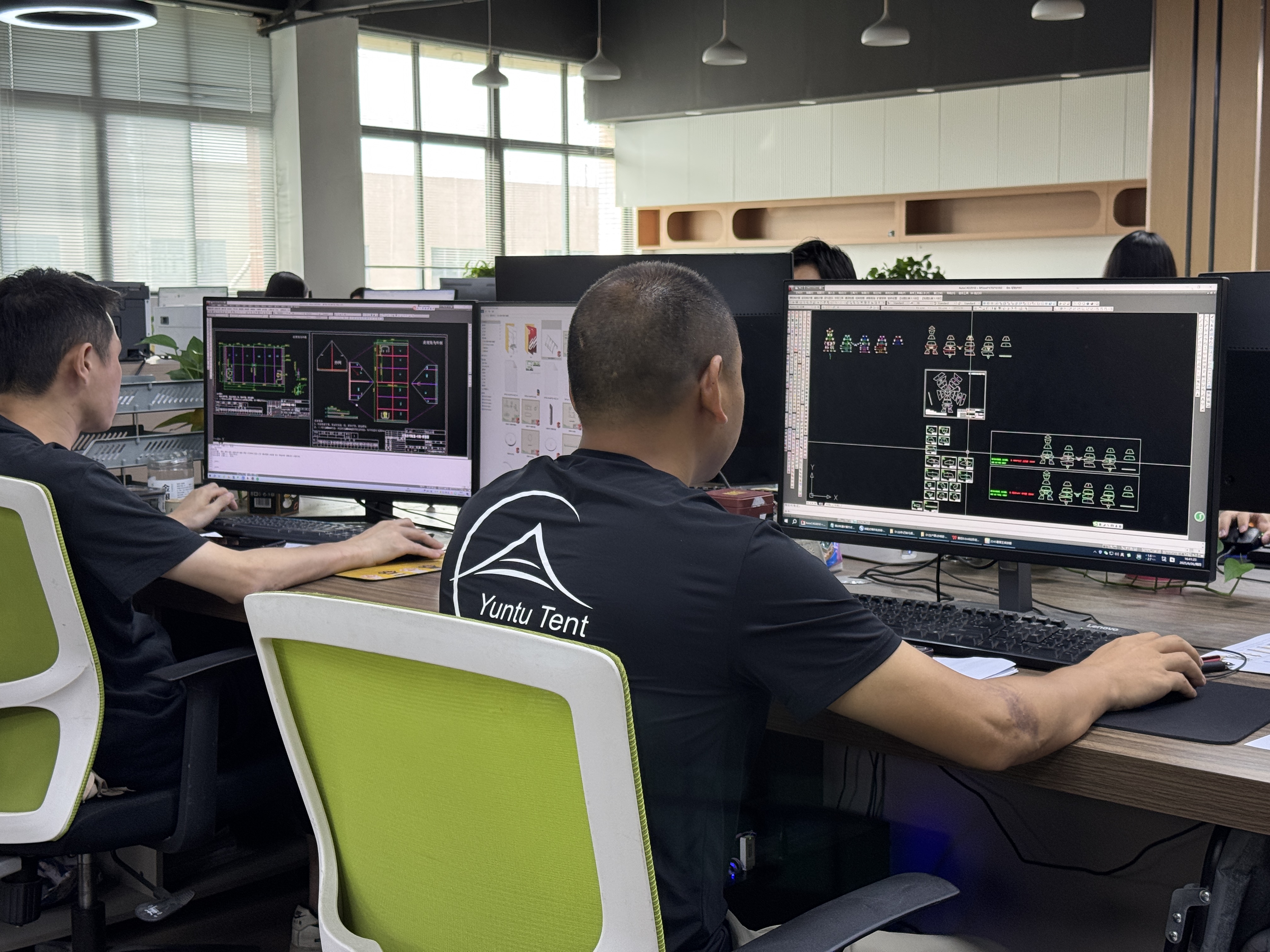
Stars Glamping (STARS GLAMPING TENT CO.,LTD) is a Guangzhou-based manufacturer of luxury glamping tents — including safari tents and glamping domes — founded in 2018, with a stated annual production capacity of 600–900 luxury tent units per year depending on project size. Export accounts for 90% of sales, with major markets in Southeast Asia, the Middle East, Africa, Europe, North America, South America and Australia, and the product range is used in safari lodges, glamping campsites, eco camps and wildlife resorts.
For a frame decision, capacity matters for one specific reason: a 600–900 unit annual output is what makes it realistic to produce a wood-framed and a steel-framed version of the same model to the same envelope specification, rather than steering a buyer toward whichever frame happens to be in stock. Published delivery is 7–15 days for domestic orders and 15–30 days for overseas orders, with free installation guidance, lifelong technical support and a 24-hour global after-sales response. Those are company-published figures; verify them against your project schedule and contract terms.
Frequently Asked Questions
Does the frame choice change the safari tent’s fire rating or waterproof performance?
The published B1 fire-retardant rating and the ≥3000mm H₂O waterproof rating are envelope specifications listed for the Safari Tent range, not frame-specific ratings, and both frame options are offered against that same published specification. What the frame changes is detailing: how the cover is fixed, where penetrations occur and how joints shed water. Ask for written confirmation that the B1 and waterproof values apply to the exact model, size and frame you are buying, and check their acceptance with your own fire and building authority.
Can we specify solid wood or galvanized steel on the same model and size?
Yes. The frame is listed as an option — finish anti-corrosion solid wood or heavy-duty galvanized steel — on the published specifications of Safari Tent - Epic, Safari Tent - Vega and Safari Tent - Lodestar, and all three are offered in 20㎡, 30㎡, 40㎡ and 50㎡ standard sizes with customization available. Keep model, size, frame and included fit-out on one line of the quotation so the comparison stays like-for-like.
Does the frame option change the price of a safari tent?
Published pricing for standard safari tent packages for 2–4 persons is stated at USD 8,190–15,710 depending on inclusions, and no frame-specific price difference is published. Because “inclusions” can cover size, lining, bathroom and kitchen modules and electrical fit-out as well as the frame, ask for an itemized offer that separates the frame line from the fit-out lines before you compare suppliers.
Can we inspect frame material or finish samples before ordering?
Request them with the offer. For a solid wood frame, ask for a finished sample of the actual timber and coating system rather than a generic swatch, plus the re-finishing guidance. For galvanized steel, ask for a section showing the coating and a connection detail. Check whatever you receive against the finish specification written into the contract, so the sample and the delivered frame describe the same thing.
What is the lead time, and how do we move from comparison to a quotation?
Published delivery is 7–15 days for domestic orders and 15–30 days for overseas orders, against an annual capacity of 600–900 luxury tent units depending on project size. To turn this comparison into a decision, send your site conditions — design temperature range, wind speed, snow load — together with your preferred size and frame option to info@stars-glamping.com or +86-133 2645 9475, and ask for a frame-specific quotation with the envelope specification and installation guidance attached.
Conclusion: Decide the Maintenance Model, Then the Frame
Solid wood and heavy-duty galvanized steel are both published options on the same Safari Tent range, and both are quoted against one envelope specification: 850g/m² PVC-coated polyester cover, breathable Oxford canvas lining, ≥3000mm H₂O waterproofing, B1 fire-retardant rating, wind resistance up to 100km/h, 60kg/m² snow load, -25°C to +60°C operation and an 8–12 year service life. The frame does not change those figures — it changes how they are held in place, how the structure is inspected and who does the work.
For most resort buyers the practical decision path is short: choose solid wood when the wood-style appearance is central to the guest experience and you can resource finish inspection and renewal; choose galvanized steel when you want a maintenance routine built around coating inspection and touch-up, and when factory-formed connections suit your site access and assembly plan. Whichever way you go, put the frame option, size, envelope specification and fit-out penetrations into one documented quotation, and confirm the wind and snow figures for that exact combination.
Planning document for your procurement file: the Stars Glamping product brochure (PDF) covers the Safari Tent range, frame options and published specifications.
Have Questions or Need More Details?
Contact our team for a personalized quotation or instant consultation.
Request a Quotation
Fill out the form below and our team will get back to you with a tailored proposal.
WhatsApp Direct Chat
Prefer to chat in real-time? Message us on WhatsApp for instant assistance & quick answers.
- Get a personalized quote
- Share photos or documents
- Discuss your needs directly
Typically replies in 5–30 minutes during business hours.