
Luxury Hotel Tent Specs FAQ: Wind, Snow, Fire and Fabric Parameters
Five numbers decide whether a luxury hotel tent can operate as a permanent resort building: a waterproof rating of at least 5000 mm H₂O, a B1 / M2 fire rating, wind resistance up to 120 km/h, a snow load of 80 kg/m², and an operating temperature range of -30℃ to +70℃. Everything else on a specification sheet — membrane weight, frame construction, wall system, expected service life — explains how a manufacturer reaches those numbers and how long the structure will hold them.
This technical FAQ is written for resort developers, procurement managers and engineering teams who are comparing luxury hotel tent specifications during research and evaluation. It answers the questions that decide whether a tent can be signed off for a beachfront hotel, a desert resort, an alpine eco-lodge or an island property — and it explains how to read the parameters rather than simply collect them. The model range referenced throughout is the Stars Glamping luxury hotel tent series: Tethys, Villa, Octagon, Shell and Pisces.
Quick answer — the specification thresholds to check first:
- Waterproofing: ≥ 5000 mm H₂O hydrostatic head across the luxury hotel tent range.
- Fire: B1 / M2 fire-retardant membrane.
- Wind resistance: up to 120 km/h (Level 10 wind).
- Snow load: 80 kg/m².
- Operating temperature: -30℃ to +70℃.
- Cover membrane: 1050 g/m² PVDF architectural membrane (Tethys, Villa, Octagon, Shell) or 850 g/m² PVC polyester fabric (Pisces).
- Frame: steel pipe; solid wood combined with steel pipe on Pisces.
- Expected service life: 25–30 years; 10–15 years for Pisces.
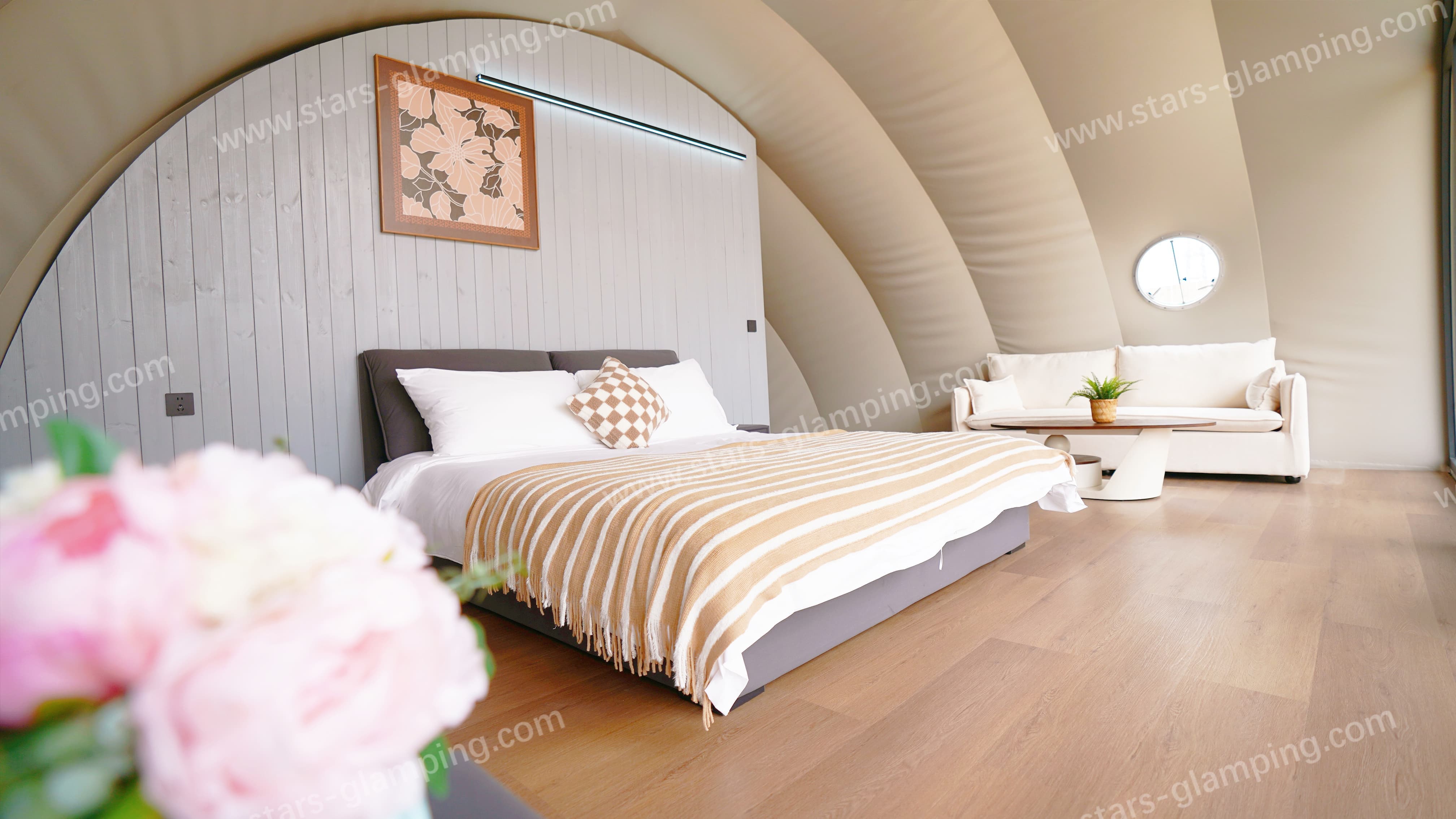
The Problem: A Specification Sheet Is Not a Selection Decision
Most luxury hotel tent projects do not fail because a number was missing. They fail because a number was copied into a tender without being matched to the site. A 120 km/h wind rating answers a different question on an exposed ridgeline than it does in a sheltered valley. An 80 kg/m² snow load answers a different question on a steep single-slope roof than it does in a roof valley where drifting snow accumulates. A ≥ 5000 mm H₂O waterproof rating answers a different question on a humid coastline than it does in a dry desert interior.
The practical consequence is that parameters should be read in the order of the risk they carry on your specific site, not in the order they appear on the datasheet:
- Exposed or snow-loading sites: read wind and snow parameters first, then frame and membrane class.
- Coastal, island or high-humidity sites: read waterproofing, UV stabilization and anti-corrosion requirements first.
- Cold-climate or high-altitude sites: read the operating temperature range and insulation system first.
- Tents placed inside a code-governed hospitality footprint: read the fire rating and certification record first, before any performance claim.
Every model in the luxury hotel tent range is rated at ≥ 5000 mm H₂O waterproofing, B1 / M2 fire-retardant, up to 120 km/h wind resistance, 80 kg/m² snow load and -30℃ to +70℃ operating temperature. The differences between models sit mainly in the cover membrane, the frame composition and the expected service life — and those differences are what change the specification decision.
Industry Background: Tents Are Now Compared Like Building Systems
Luxury hotel tents have moved from seasonal glamping inventory to permanent, all-season accommodation assets, and procurement expectations have moved with them. The global glamping market was valued at approximately USD 3.8 billion in 2025, with tents forming a major accommodation segment alongside cabins and pods, according to Grand View Research. Fortune Business Insights projects the market to reach USD 9.15 billion by 2034, growing at a CAGR of 10.67%. Europe held a 35% revenue share in 2025, according to Grand View Research.
Growth of that scale puts tent specifications into the same review process as prefabricated buildings. Two reference points matter for that review:
- Fire performance. Luxury resort tents must typically meet fire retardancy standards such as NFPA 701 (United States) or EN 13501-1 (Europe) for safe commercial use in hospitality, per the International Fire Code. A B1 / M2 rating is the membrane-level starting point; the project-level requirement is set by the local authority having jurisdiction.
- Membrane durability. Industry technical references for high-performance PVDF architectural membranes cite service lives of 15–30 years and wind performance in the region of 120–140 km/h. Stars Glamping specifies its PVDF models at 25–30 years and up to 120 km/h, and its PVC model at 10–15 years.
For a supplier, that shift means specification questions arrive earlier: before renderings, before pricing, often before site selection is final. Stars Glamping — a Guangzhou-based manufacturer of luxury glamping tents, founded in 2018, operating a 20,000㎡ manufacturing base and a 4,000㎡ simulation exhibition hall — builds its engineering documentation around that earlier stage.
The Five Core Parameters, Explained
Waterproof rating: what ≥ 5000 mm H₂O actually means
A hydrostatic head rating states how much vertical water column a fabric resists before water passes through. A rating of ≥ 5000 mm H₂O means the cover membrane is specified to hold a 5,000 mm column of water without penetration. For a beachfront hotel tent or an island resort tent facing driven rain and salt-laden humidity, this is the parameter that separates a permanently dry interior from a maintenance problem.
One caution when comparing suppliers: heavy-duty PVC and PVDF membranes used in luxury hotel tents are non-porous, and wider industry fabric guidance cites hydrostatic head ratings exceeding 10,000 mm H₂O for the heaviest constructions. The number that governs procurement is the one stated on the datasheet for the exact model being purchased — not the highest figure quoted anywhere in a catalogue. Across the Stars Glamping luxury hotel tent range, that stated figure is ≥ 5000 mm H₂O, with UV stabilization and anti-aging treatment included as part of the membrane specification.
Fire rating: B1 / M2 and how it maps to NFPA 701 and EN 13501-1
B1 and M2 are fire-retardancy classifications applied to the cover membrane, indicating limited flame spread. All five models in the range — Tethys, Villa, Octagon, Shell and Pisces — use B1 / M2 fire-retardant membrane. For a commercial hospitality project, that classification is the membrane input into a wider fire strategy that may also be reviewed against NFPA 701 or EN 13501-1, depending on jurisdiction.
Stars Glamping holds a General Product Safety Directive Attestation of Conformity (CE) issued by UDEM under certificate number M.2024.206.C96444, assessed against EN ISO 5912:2020 and applicable to the EU market. The certificate is valid from 31 January 2024 to 30 January 2029. Its scope covers tent products including Safari Lodge models, and the certification record lists the Tethys, Villa, Octagon, Shell and Pisces luxury tent models alongside it. For a building-code-compliant hotel tent submission, this is the type of certificate file a specifier should receive as an attachment — not a verbal assurance.
Wind resistance: up to 120 km/h (Level 10) and site exposure
Wind resistance up to 120 km/h corresponds to Level 10 wind and applies across the luxury hotel tent range. The number describes the structural envelope the tent is engineered for. What it does not do is assess your site, and that gap is where most wind-related specification errors occur.
Three site factors change how a 120 km/h rating should be read: terrain exposure (open coastline, ridge lines and desert plains produce higher local wind speeds than sheltered forest or valley floors), installation height above ground, and building spacing. Stars Glamping's stated technical focus areas include wind resistance, waterproofing, heat insulation and quick assembly, supported by 54 national patents, and the company's engineering team assesses site conditions as part of the customization process rather than applying a single standard configuration.
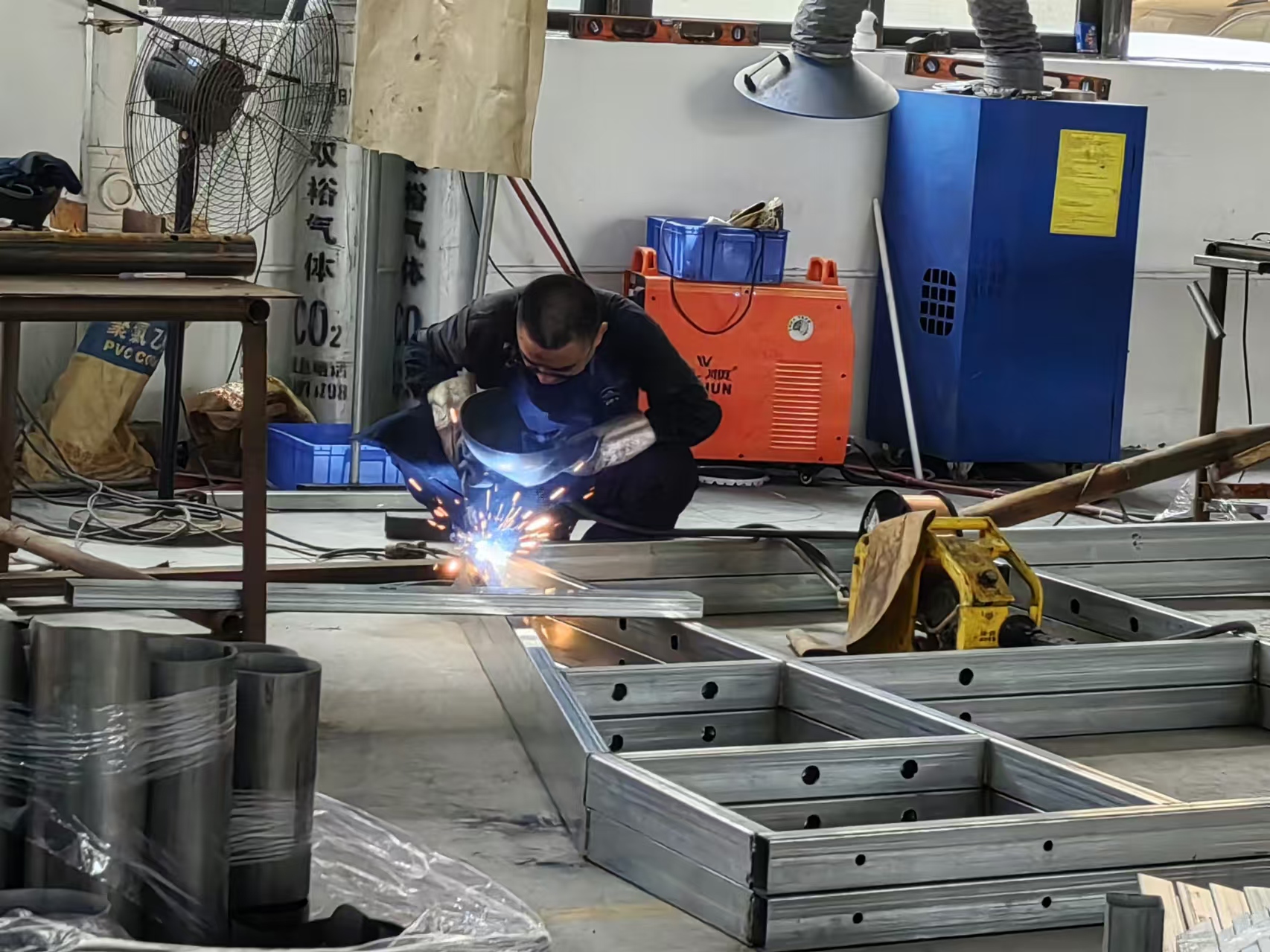
Snow load: 80 kg/m² and roof geometry
An 80 kg/m² snow load means the roof structure is specified to carry 80 kilograms of snow per square metre of loaded area — the parameter that determines whether a mountain resort tent or a cold-climate eco-lodge can remain open through winter. It is a structural figure, not a weather forecast, and it interacts with roof geometry: accumulation in valleys, drift against walls and asymmetry on multi-peak roofs can exceed the uniform load a rating assumes.
The insulated luxury hotel tent for cold climate use pairs this roof capacity with a thermal insulation system. In practice, a snow-load rating, an insulation system and operable ventilation have to be specified together — roof capacity without insulation produces a tent that stands but cannot be sold as winter accommodation.
Operating temperature: -30℃ to +70℃
The -30℃ to +70℃ range describes the conditions the membrane and structure are specified to withstand without loss of function. It covers alpine winters at the lower end and desert summers and tropical exposure at the upper end, and it applies across all five luxury hotel tent models.
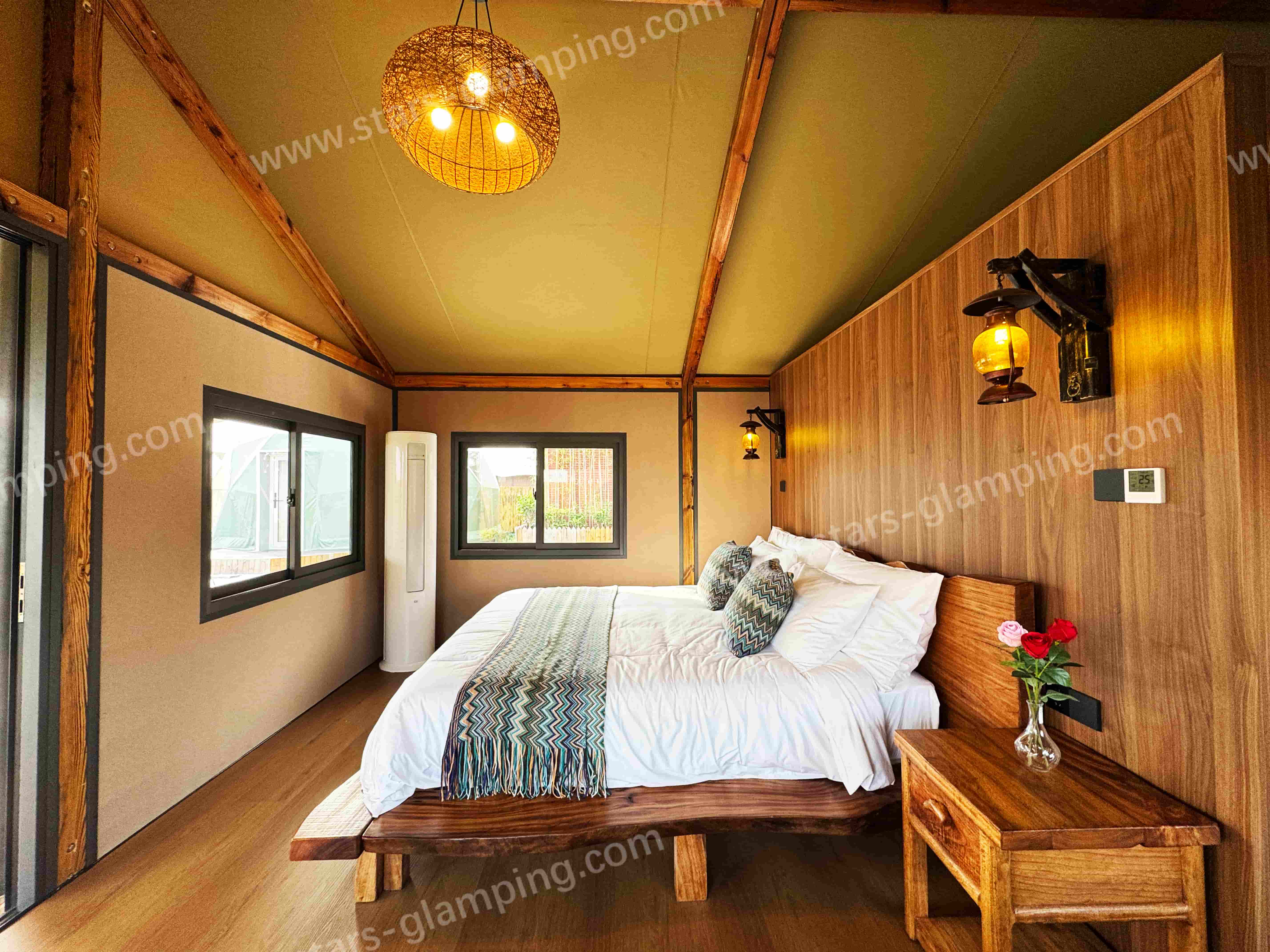
Temperature performance is where matched systems decide guest comfort rather than structural survival. The application specification for permanent resort installations pairs the tent structure with an insulation lining system, air conditioning, a glass door and panoramic window set, a wooden flooring system, a bathroom module with shower and toilet, an electrical and lighting system, and a curtain and shading system. A luxury hotel tent with bathroom and air conditioning is therefore a system specification, not a single-line item — and procurement should expect the equipment list to be quoted alongside the structure.
Fabric Parameters: 1050 g/m² PVDF vs 850 g/m² PVC
Cover membrane weight is the parameter most often misread as a simple quality score. It is better read as a service-life and maintenance variable. The two specifications used across the range are:
- 1050 g/m² PVDF architectural membrane fabric — used on Tethys, Villa, Octagon and Shell, with a stated service life of 25–30 years.
- 850 g/m² PVC polyester fabric — used on Pisces, with a stated service life of 10–15 years.
Both membranes carry the same core performance ratings: ≥ 5000 mm H₂O waterproofing, UV stabilized and anti-aging treatment, and B1 / M2 fire retardancy. The difference is in the long-horizon behaviour of the surface. PVDF architectural membrane is the specification used when a resort developer is underwriting a 25–30 year asset and wants to limit re-covering cycles; PVC polyester fabric is the specification used when the priority is a lower entry specification with a defined 10–15 year life cycle.
The material build-up also differs. Tethys, Villa, Octagon and Shell use a steel frame with PVC / PVDF fabric and an insulated glass wall system. Pisces uses a steel frame with PVC fabric and an insulated canvas wall system, combined with solid wood in the frame. That distinction matters for buyers searching for a glass wall luxury hotel tent versus a canvas-wall interpretation of the same building type.
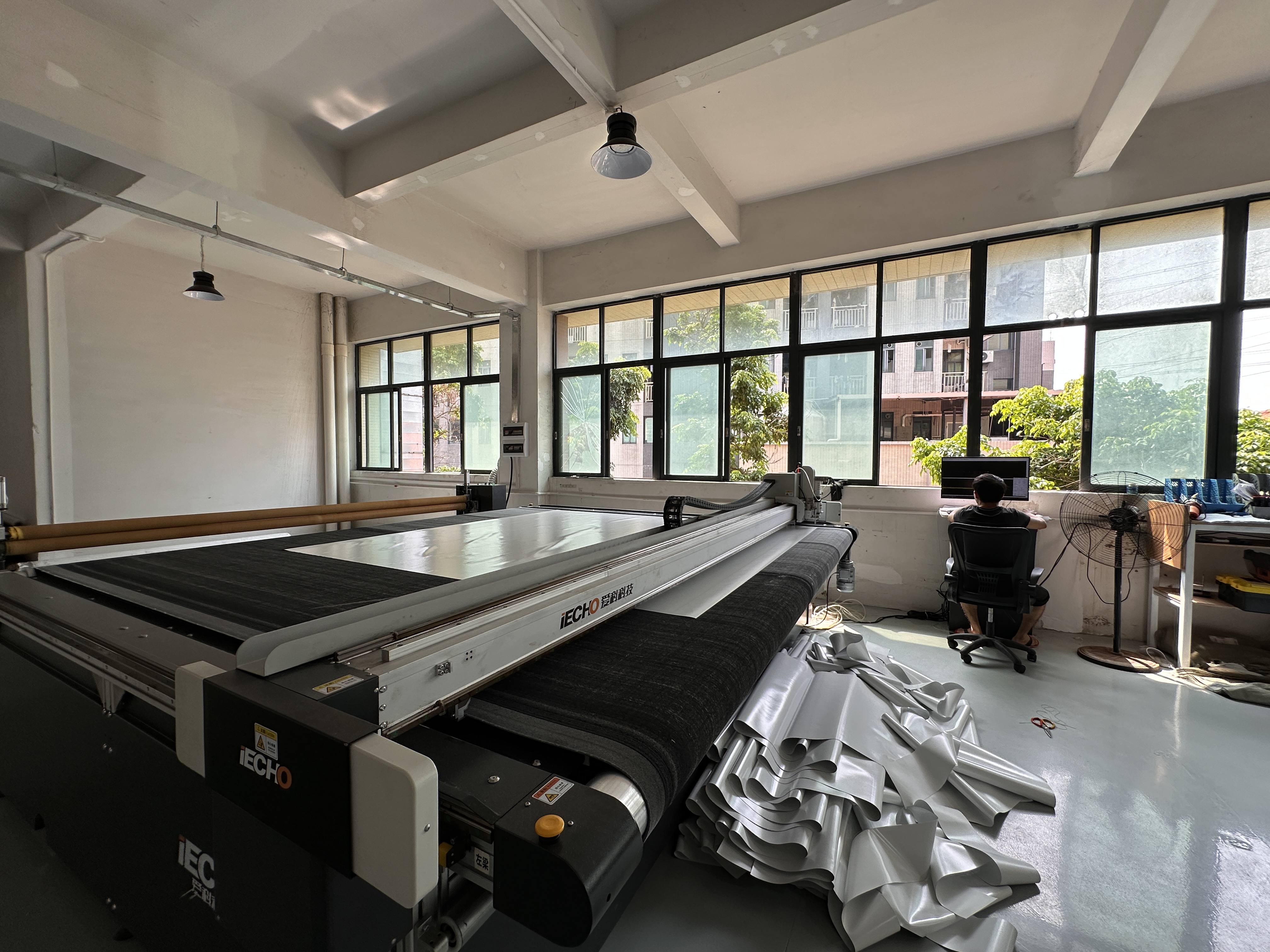
Frame Parameters: Steel Pipe, and Where Solid Wood Fits
Frames across the range are steel pipe, with Pisces using solid wood combined with steel pipe. Steel pipe framing is the parameter linked to the wind and snow figures: 120 km/h wind resistance and 80 kg/m² snow load are structural outcomes of the frame and roof system, not of the membrane alone.
This is also where a modular luxury hotel tent system becomes a procurement advantage rather than a marketing phrase. Modular frames allow the same structural specification to be configured into different footprints and layouts — reception and restaurant tents, accommodation units, or a mix on the same site — while keeping one engineering baseline. Stars Glamping's customization scope covers size and layout, tent structure design, fabric material selection (PVC, PVDF or insulation), frame material (steel or aluminium), interior layout and furniture, bathroom integration, logo branding and colour.
Service Life: 25–30 Years vs 10–15 Years
Expected service life is the parameter that connects the technical specification to the investment decision. The range is specified at 25–30 years for Tethys, Villa, Octagon and Shell, and 10–15 years for Pisces.
Read in combination with the other parameters, this gives a clear selection rule: if the project is a long-term permanent asset where re-covering and structural intervention during the hold period are unacceptable, the PVDF models are the appropriate specification. If the project is a phased development, a pilot cluster, or a site where the accommodation mix may change within a decade, the Pisces specification delivers the same core ratings — ≥ 5000 mm H₂O, B1 / M2, 120 km/h, 80 kg/m², -30℃ to +70℃ — against a shorter service life.
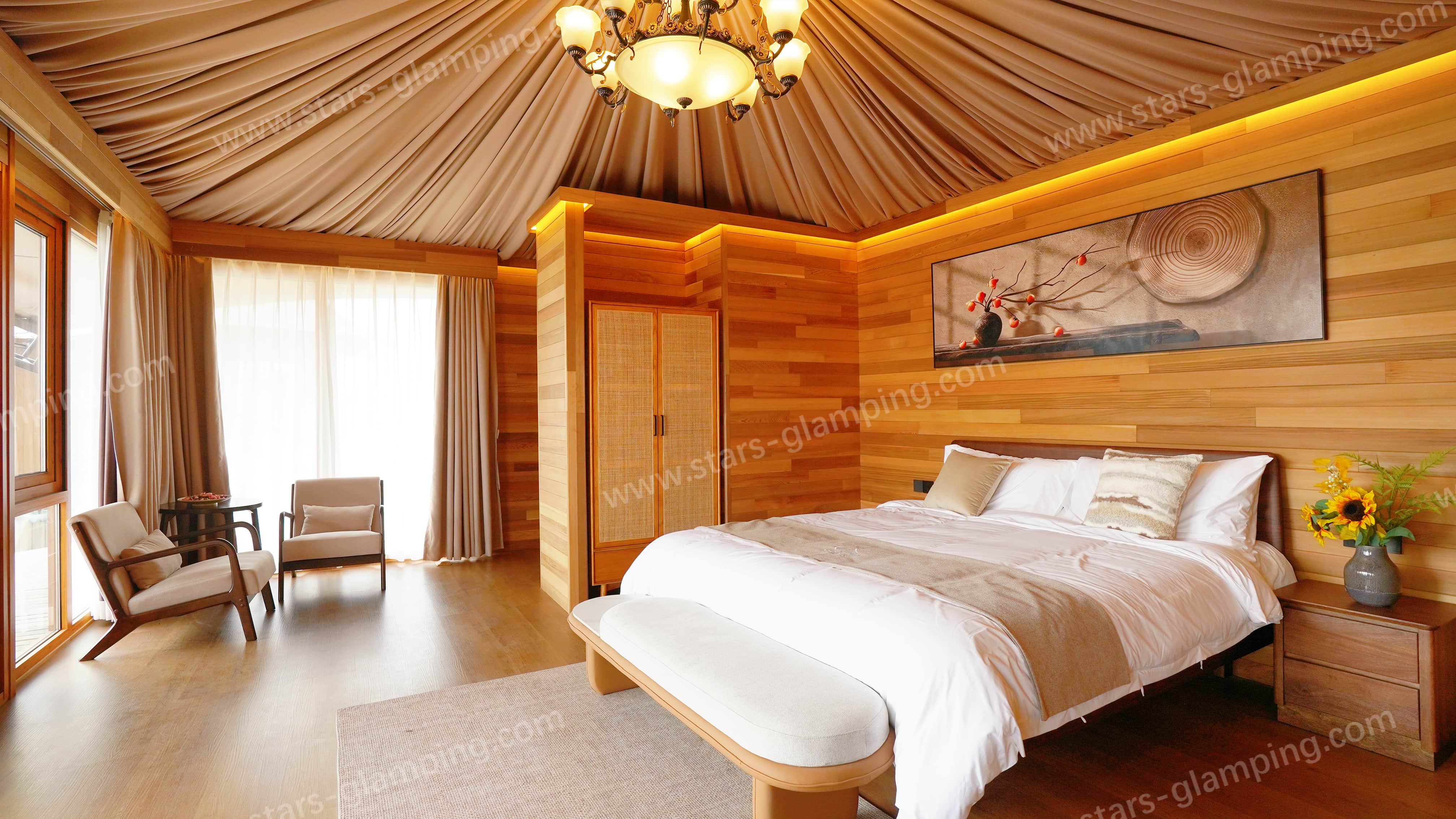
Step-by-Step: Matching Specs to a Site in Six Steps
- Fix the site risk order. Rank wind, snow, humidity, temperature swing and fire-code exposure for the actual plot. This determines which parameter is pass / fail and which is negotiable.
- Convert site data into required ratings. Compare local design wind speed against the 120 km/h rating, local ground snow load against 80 kg/m², and local temperature extremes against -30℃ to +70℃.
- Select the membrane class. Choose 1050 g/m² PVDF for a 25–30 year asset, or 850 g/m² PVC polyester for a 10–15 year life cycle.
- Confirm the wall and insulation system. Insulated glass wall systems for PVDF models, insulated canvas wall systems for Pisces, with the insulation lining specified where winter operation is planned.
- Collect the compliance file. Request the CE attestation, certificate number, issuing body, standard, and validity dates, and confirm which products the certificate scope covers.
- Match the operational systems. Finalise the equipment list — air conditioning, bathroom module, flooring, electrical and lighting, curtains and shading — before signing, because these items change both the interior layout and the installation sequence.
Use Cases: The Same Parameters in Four Climates
The same five ratings are interpreted differently by climate. Stars Glamping's project record illustrates how that plays out in practice, and the company serves markets across Southeast Asia, the Middle East, Africa, Europe, North America, South America and Australia.
- Beachfront resort (India, 100 luxury tents). A government tourism developer project for beachfront resort accommodation, specified for long-term permanent use. The stated highlights were environmentally friendly construction, high wind resistance, thermal insulation and panoramic views — a combination that puts waterproofing, UV stabilization and anti-corrosion for coastal environments ahead of snow load in the specification order.
- Desert resort (Saudi Arabia, 30 luxury tents). A full luxury desert resort accommodation project with custom desert design. Highlights were high wind resistance, thermal insulation and panoramic views. In this climate the temperature range and UV stability drive the membrane choice, and dust plus temperature cycling drives the detailing.
- Mountain resort (Nepal, 19 luxury tents). A custom mountaintop design for luxury mountain resort accommodation, with high wind resistance and thermal insulation as stated highlights. This is the combination where 80 kg/m² snow load and insulated construction become the binding constraints.
- Wildlife safari and eco-tourism (Cape Verde, 12 luxury hotel tents). A safari accommodation project in long-term outdoor use for 8+ years, using eco-friendly materials, an off-grid solution and natural ventilation design. Here the specification emphasis is on sustainability and off-grid operation alongside the structural ratings.
Model-by-Model Specification Comparison
The table below compares only the parameters stated in the product specifications. It is a reading tool, not a ranking: the correct model is the one whose service life and wall system match the project's hold period and climate.
| Model | Frame material | Cover membrane | Waterproof & fire | Wind & snow | Temperature | Service life |
|---|---|---|---|---|---|---|
| Luxury Tent – Tethys | Steel pipe | 1050 g/m² PVDF architectural membrane | ≥ 5000 mm H₂O / B1, M2 | Up to 120 km/h / 80 kg/m² | -30℃ ~ +70℃ | 25–30 years |
| Luxury Tent – Villa | Steel pipe | 1050 g/m² PVDF architectural membrane | ≥ 5000 mm H₂O / B1, M2 | Up to 120 km/h / 80 kg/m² | -30℃ ~ +70℃ | 25–30 years |
| Luxury Tent – Octagon | Steel pipe | 1050 g/m² PVDF architectural membrane | ≥ 5000 mm H₂O / B1, M2 | Up to 120 km/h / 80 kg/m² | -30℃ ~ +70℃ | 25–30 years |
| Luxury Tent – Shell | Steel pipe | 1050 g/m² PVDF architectural membrane | ≥ 5000 mm H₂O / B1, M2 | Up to 120 km/h / 80 kg/m² | -30℃ ~ +70℃ | 25–30 years |
| Luxury Tent – Pisces | Solid wood + steel pipe | 850 g/m² PVC polyester fabric | ≥ 5000 mm H₂O / B1, M2 | Up to 120 km/h / 80 kg/m² | -30℃ ~ +70℃ | 10–15 years |
All PVDF models additionally use PVC / PVDF fabric with an insulated glass wall system; Pisces uses PVC fabric with an insulated canvas wall system. The model designations in the range are Luxury Tent – Tethys, Luxury Tent – Villa, Luxury Tent – Octagon, Luxury Tent – Shell and Luxury Tent – Pisces.
FAQ: Luxury Hotel Tent Specification Questions
1. What fire rating and certification should a luxury hotel tent carry for commercial hospitality use?
The membrane should carry a fire-retardant classification such as B1 / M2, and luxury resort tents must typically meet fire retardancy standards such as NFPA 701 (United States) or EN 13501-1 (Europe) for safe commercial use in hospitality, according to the International Fire Code. Because the final requirement is set locally, the supplier file matters as much as the rating. Stars Glamping holds a General Product Safety Directive Attestation of Conformity (CE) for the EU market, issued by UDEM under certificate number M.2024.206.C96444 and assessed against EN ISO 5912:2020, valid from 31 January 2024 to 30 January 2029. Its scope covers tent products including Safari Lodge models, and the certification record lists the Tethys, Villa, Octagon, Shell and Pisces luxury hotel tent models.
2. Can the wind, snow and temperature specifications be adapted to a specific project site?
Yes. The range is built on a customization model rather than fixed catalogue configurations. Customization covers size and layout, tent structure design, fabric material (PVC / PVDF / insulation), frame material (steel / aluminium), interior layout and furniture, bathroom integration, logo branding and colour. Stars Glamping's engineering capability is supported by a six-person R&D team working across architectural design, structural engineering and materials science, and by 54 national patents with core technologies covering wind resistance, waterproofing, heat insulation and quick assembly. Site conditions are assessed during the customization process, so an exposed coastal plot and a sheltered valley plot are not specified identically.
3. Which specification choices change project cost the most?
Cost in a luxury hotel tent project is driven mainly by specification level rather than by footprint alone. The largest variables are the cover membrane class (1050 g/m² PVDF architectural membrane versus 850 g/m² PVC polyester fabric, which also moves service life from 25–30 years to 10–15 years), the wall system (insulated glass wall system versus insulated canvas wall system), the frame configuration, and the depth of interior customization — bathroom integration, furniture and layout. Operational systems such as air conditioning, insulation lining, wooden flooring, electrical and lighting, and curtains and shading are quoted as part of the same system specification. Buyers should compare quotations on a like-for-like specification basis, since a difference in membrane class or wall system will explain most of the price gap.
4. Can we validate fabric and structure before committing to full production?
Yes. The minimum order quantity is 1 unit, and samples are available. Quality control runs through raw material inspection, in-process quality control and pre-shipment inspection, with third-party inspection available on request. The company operates a 4,000㎡ simulation exhibition hall, which allows buyers to review structural detailing, membrane handling and interior fit-out before a production order is released.
5. How long does production and delivery take, and what support follows installation?
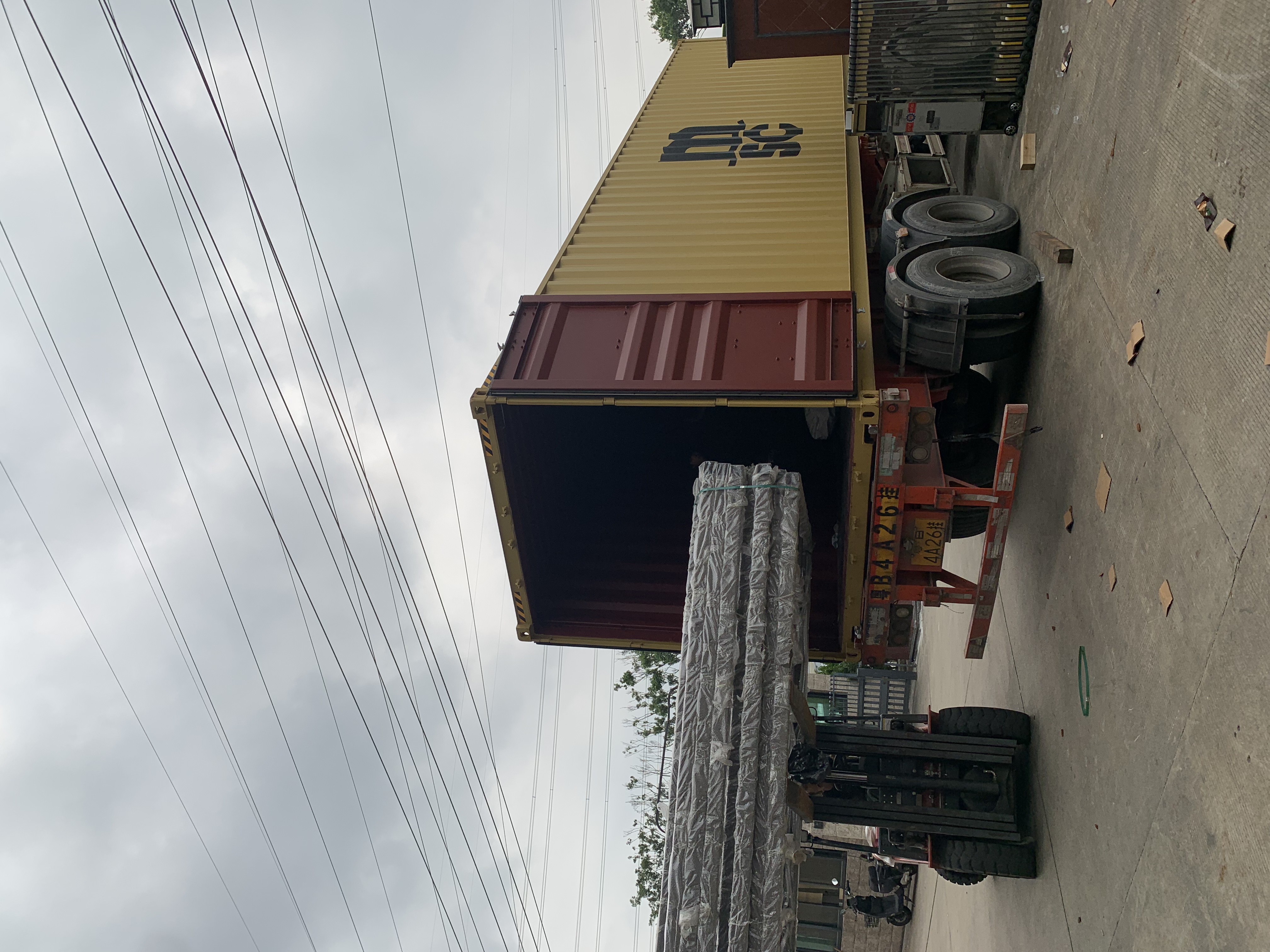
Lead time is 15–20 days for standard models and 20–30 days for customized projects, with monthly capacity of 50–80 luxury tent units depending on project size. Delivery is 7–15 days for domestic orders and 15–30 days for overseas orders. After-sales support includes installation guidance, engineering drawings, 24/7 technical support, spare parts supply, maintenance support, and remote or on-site project assistance. If you are still at the comparison stage, sending your site climate data and intended unit count to Stars Glamping is the fastest way to get a specification-matched response: www.starstent.com.

Conclusion: What to Take to Your Next Supplier Meeting
Luxury hotel tent specifications become a decision document once four questions are answered: what the site exposes the structure to, which membrane class matches the asset hold period, whether the wall and insulation system supports the intended operating season, and whether the compliance file can be produced with a certificate number and a validity date. The parameters themselves are consistent across the model range — ≥ 5000 mm H₂O waterproofing, B1 / M2 fire retardancy, up to 120 km/h wind resistance, 80 kg/m² snow load, and -30℃ to +70℃ operating temperature — which means the selection decision usually turns on membrane class, wall system and service life rather than on raw performance.
Bring three inputs to the next supplier conversation: your site's design wind speed and ground snow load, your planned operating season, and your intended asset hold period. Those three inputs will select the model specification faster than any general performance claim.
Next Step: Specification Review and Sample Request
Stars Glamping manufactures luxury hotel tents, glamping domes and safari tents, with a 20,000㎡ manufacturing base, a 4,000㎡ simulation exhibition hall, and a 12-step quality inspection system. The company serves resort developers across more than 40 countries, with a minimum order quantity of 1 unit and samples available.
Send your site conditions and unit requirements to www.starstent.com, or download the product catalogue and specification pack here: Stars Glamping Product Catalogue (PDF). Contact: info@stars-glamping.com | +86-133 2645 9475.
Specification figures quoted in this article reflect the published product parameters for the Stars Glamping luxury hotel tent range and the company's certification record. Project-level requirements should always be confirmed against local building codes and the authority having jurisdiction.
Have Questions or Need More Details?
Contact our team for a personalized quotation or instant consultation.
Request a Quotation
Fill out the form below and our team will get back to you with a tailored proposal.
WhatsApp Direct Chat
Prefer to chat in real-time? Message us on WhatsApp for instant assistance & quick answers.
- Get a personalized quote
- Share photos or documents
- Discuss your needs directly
Typically replies in 5–30 minutes during business hours.