
How to Deploy Safari Tents in Mountain Resorts: Configuring for Snow Load and High Winds
Mountain resorts impose a load case on a safari tent that lowland safari camps never see. Snow sits on the roof as a sustained load instead of running off. Wind accelerates as it is compressed between ridges and funnelled down valleys, so a plot that feels sheltered in summer can be the most exposed point on the whole site in winter. Freeze–thaw cycles then work on every seam, anchor and fabric fold for months at a time.
The engineering answer is largely settled at platform level. The safari tent platform supplied by Stars Glamping is engineered to a 60 kg/m² snow load and 100 km/h (Level 9) wind resistance, and is produced in standard footprints of 20–50 ㎡ that suit terraced hillside layouts, with customization available for site-specific anchoring. Stars Glamping (STARS GLAMPING TENT CO., LTD) is a Guangzhou-based manufacturer of glamping domes, safari tents and luxury tents founded in 2018, operating from a 20,000 ㎡ manufacturing base and exporting to more than 40 countries.
This guide is written for resort owners, developers and procurement teams who have already chosen a tented structure and now need to know how to configure it for snow and wind, how anchoring and insulation are handled, how the deployment sequence runs on a mountain site, and how the decision compares with standard camping tents over an 8–10 year operating life.
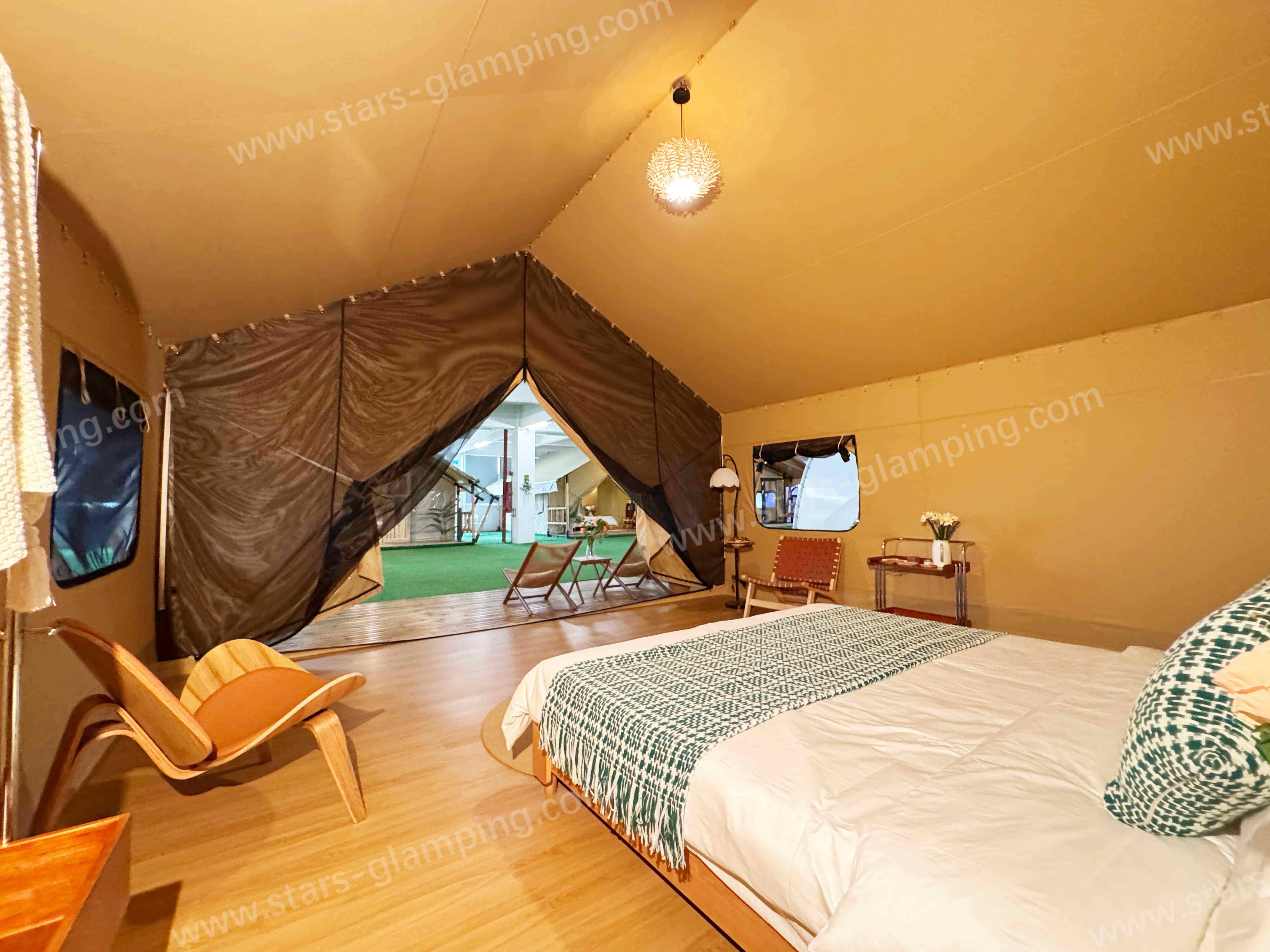
Safari tent accommodation structure prepared for mountain resort deployment.
Problem Definition: What Actually Fails on a Mountain Site
Two structural inputs govern almost everything else on a mountain project: snow load and wind load. Insulation, waterproofing, condensation control and site access are consequences of those two inputs and of the terrain the platform sits on.
The snow problem
Snow does not behave like rain. Rain runs off a surface; snow stays on it. A 60 kg/m² rating describes the sustained roof load that the platform's frame and cover are engineered to carry. Whether that rating is sufficient for a specific plot depends on three site variables rather than on the tent alone: the snow expectation at that altitude and latitude, the roof pitch and geometry, and the spacing between units. The spacing point is often underestimated — snow can bridge the gap between two adjacent tents, and it can slide from an upper terrace onto a lower one.
The wind problem
The platform carries a wind resistance figure of 100 km/h (Level 9). Mountain wind is not uniform, however. Ridge-top and shoulder plots are far more exposed than plots on a valley floor only a few hundred metres away, and valleys themselves can channel and accelerate airflow. The structural frame resists the pressure; the anchoring system is what keeps the entire building in place. That is why anchoring is the customization item that matters most on mountain projects, and why it should be designed from a site survey rather than selected from a catalogue list.
The comfort and durability problem
Sub-zero nights call for an insulated safari tent configuration together with deliberate condensation management. Freeze–thaw cycles repeatedly stress fabric coatings, seams and steel surfaces. Mountain logistics add a third constraint: narrow access roads, limited crane windows and short construction seasons decide how a camp is staged and how much of the work can be prefabricated before it reaches the site.
A practical way to treat the two numbers: 60 kg/m² and 100 km/h define what the platform can carry, while the site survey defines what the plot will actually see. Keeping those two questions separate — and documenting both — makes the procurement decision far cleaner.
Industry Background: Why Mountain Tented Accommodation Is Expanding
Beach and mountain hotels appear alongside luxury resorts, glamping projects, safari parks and eco-tourism camps as named applications for the safari tent platform. Market data explains part of that demand. The global glamping tents market was valued at USD 3,124.89 million in 2023 and is projected to grow to USD 6,484.86 million by 2032, according to Zion Market Research. The safari tourism market is expected to reach USD 66.9 billion by 2033, growing at a CAGR of 7.7% from 2026, according to Grand View Research. Africa recorded an 8% increase in international arrivals in 2025, reaching 81 million travellers, based on UNWTO and Grand View Research data.
Two consequences follow for buyers. First, tented accommodation is now an established asset class, which means lenders, operators and guests apply the same expectations to a canvas structure as they do to a conventional building. Second, because the category has become crowded, differentiation increasingly comes from site selection — and mountain sites are exactly the ones that demand real structural engineering rather than a standard camp layout.
Compliance expectations have hardened alongside the market. Safari tents are required to meet flame retardancy standards such as CPAI-84 in North America and NFPA 701 for commercial use, and CE certification under EN ISO 5912:2020 covers general product safety. On a mountain project, those tests sit alongside the snow and wind ratings rather than replacing them.
Detailed Solution: Configuring a Safari Tent for Snow Load and High Winds
1. Start with a galvanized steel frame and a technical fabric cover
The reference configuration is the 'Neptune' safari tent model: a 76 mm galvanized steel frame with an 850 g/sm PVC cover, rated as 100% waterproof and flame retardant. Galvanized steel is the sensible default in mountain climates because the coating protects the frame through long wet and freeze–thaw periods. In-house hardware and fabric workshops matter here for a practical reason: anchoring brackets and frame joints are the components most often adjusted for a specific site, and controlling their production keeps that adjustment precise.
2. Convert the 60 kg/m² snow rating into a roof and terrace plan
Snow load travels along a load path: cover, then purlins, then frame, then columns, then platform, then anchors. Every element in that chain has to be designed for the same figure. Practical measures include steeper roof pitches so snow sheds rather than accumulates, avoiding flat pockets where drifting can build up, maintaining clearance between units on adjacent terraces, and directing snow shed away from walkways and entrances.
3. Treat 100 km/h wind resistance as a system, not a standalone number
Wind resistance is the result of frame strength, cover attachment and anchoring acting together. Because exposure differs between ridge, shoulder and valley plots, the anchor design is the variable that changes from one platform to the next. Site-specific anchoring is where customization earns its place on a mountain project — the same tent frame can be specified with different anchor solutions depending on what the survey reports.
4. Insulate, waterproof and protect the structure against UV
Weather risk in mountain environments concentrates on four fronts: water, wind, fire and UV exposure. The control method applied across the platform is waterproof PVC/PVDF fabric, a reinforced steel structure, flame-retardant materials and UV protection, supported by engineering support, pre-shipment testing, installation guidance and after-sales service. For winter occupancy, an insulated safari tent configuration keeps the interior usable through cold nights. Fit-out choices such as a bathroom, a kitchen or electrical services all attach to the frame, so they should be decided before production rather than after delivery.
5. Match footprints to terraces
Standard footprints of 20–50 ㎡ map well onto terraced sites. Smaller units fit narrow benches where a wide platform would require excessive excavation, while units at the upper end of the range support family accommodation with a bathroom and kitchen. Because the safari tent works as a modular safari tent system, the same frame components can be repeated across stepped platforms, which simplifies both the anchoring plan and future replacement of individual units.
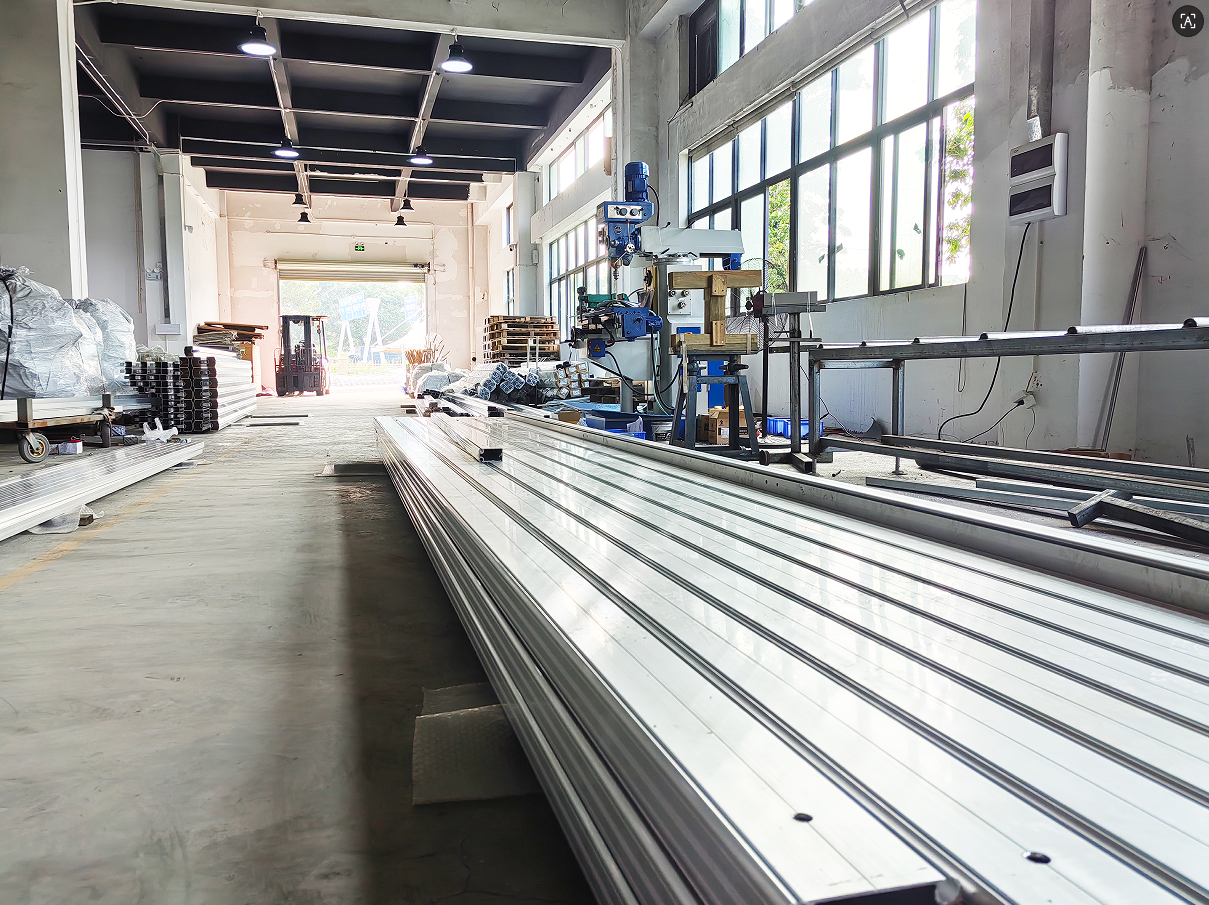
In-house hardware production: frame joints and anchoring components are made under the manufacturer's own quality control.
Step-by-Step Breakdown: Deploying a Mountain Safari Tent Camp
- Collect site snow and wind data before any layout work. Altitude, local snow expectation and exposure class should be recorded plot by plot, because adjacent terraces on the same site can perform very differently.
- Map terraces and assign footprints. Standard footprints of 20–50 ㎡ are matched to the usable platform dimensions, with the modular system keeping frame specification consistent across the camp.
- Design anchoring and foundations per plot. This is the customization step for mountain terrain, and it follows from the survey rather than from a standard detail.
- Confirm the insulation and condensation strategy. Winter operation requires the insulated configuration plus ventilation planning that suits the number of occupants and the intended heating approach.
- Produce frame, cover and hardware. Fabric and hardware are manufactured in-house, which keeps the cover, frame and bracket tolerances aligned.
- Run pre-shipment quality control. Production follows a 12-step quality inspection system, and pre-shipment testing takes place before goods leave the factory.
- Plan logistics and staging around the mountain access window. Delivery time is 7–15 days for domestic orders and 15–30 days for overseas orders, and staging should be sequenced so that frame erection is not interrupted by a closed access road.
- Assemble the frame first, then the cover. A steel frame assembled and inspected before fabric installation is faster to correct than one discovered to be misaligned after the cover is tensioned.
- Fit out services and interiors. Bathroom, kitchen and electrical installations are attached to the structure and should be coordinated with the frame layout from the start.
- Commission, hand over and maintain. Installation guidance is provided, followed by lifelong technical support and a 24-hour global after-sales response mechanism.
The engineering work behind these steps is handled by a dedicated R&D team covering architectural design, structural engineering and materials science. Stars Glamping holds 54 national patents with core technologies covering wind resistance, waterproofing, heat insulation and quick assembly, and launches more than 10 new products annually.

R&D work covering architectural design, structural engineering and materials science.
Use Cases: Where Mountain and High-Wind Safari Tents Fit
Terraced mountain resort
A stepped site with 20–50 ㎡ platforms on each bench is the classic mountain application. The modular frame keeps unit specification consistent, while anchoring is adapted to the exposure of each individual terrace.
Winterized alpine lodge
Where the operating season extends into cold months, the insulated safari tent configuration carries the accommodation. An 850 g/sm PVC cover on a 76 mm galvanized steel frame provides the waterproof and flame-retardant base layer that winter operation depends on.
Mountain valley riverside lodge
Valley-floor plots are usually better sheltered from wind but collect water. Here the priorities shift toward waterproofing, drainage and anchoring that performs in wet, freeze–thaw ground conditions.
High-wind ridge and coastal sites
Beach and mountain hotels often share the same exposure profile: sustained wind rather than sustained snow. On these plots the anchoring design and cover attachment do most of the work, which is why the same platform can serve both site types once the anchor package is matched to the site.
Eco-tourism and sustainable mountain camps
Eco-friendly positioning depends on material durability and replacement frequency as much as on marketing language. A structure with an 8–10 year expected lifespan generates less waste than a shelter replaced every one to two years.
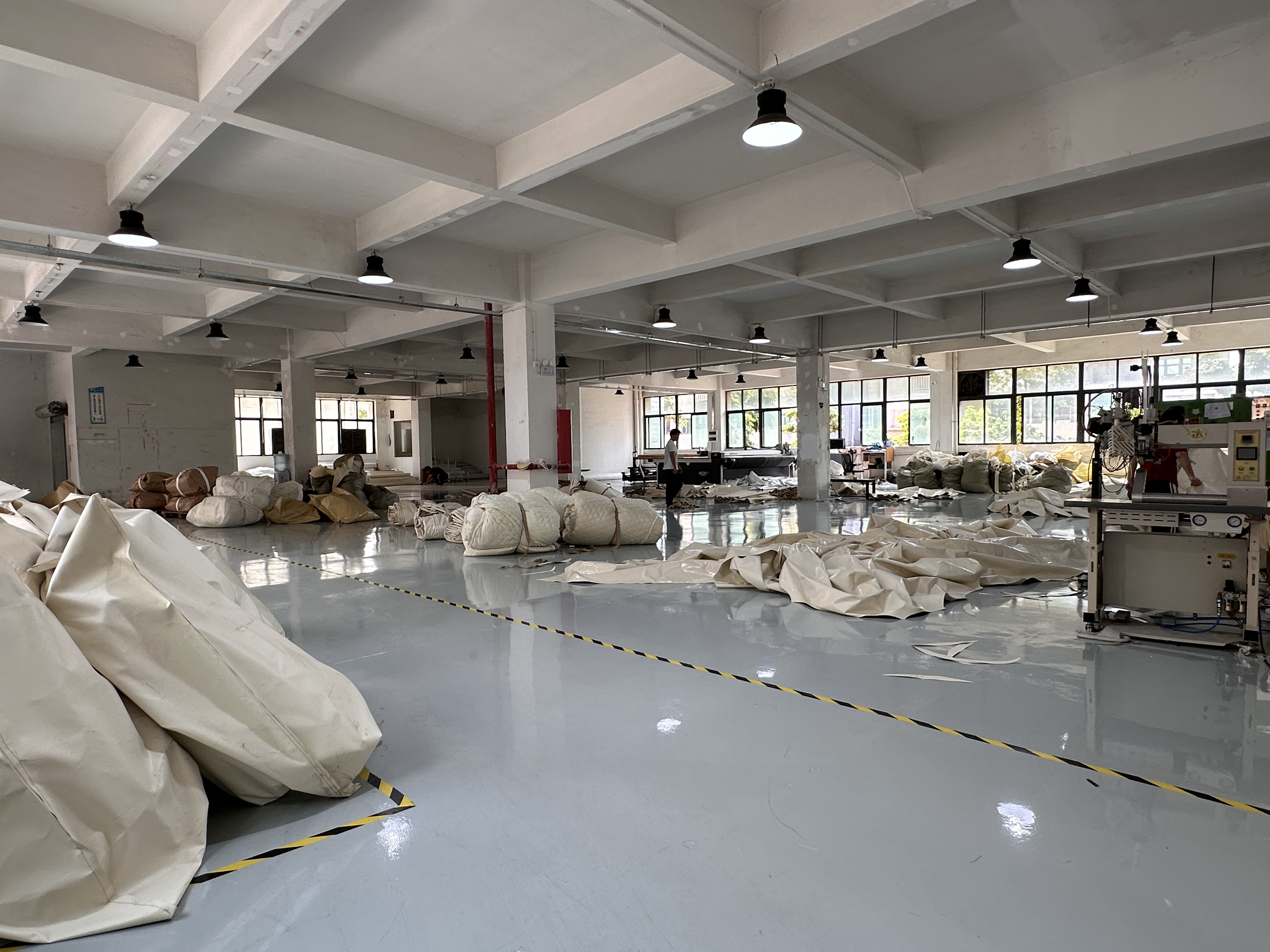
Fabric production: PVC cover material is cut, welded and finished in-house.
Comparison Table: Safari Tent vs Standard Camping Tent
At decision stage, the comparison that matters is between structure classes rather than between catalogue items. The table below sets out the differences between a safari tent and a standard camping tent.
| Comparison criterion | Safari tent | Standard camping tent |
|---|---|---|
| Purpose | Luxury accommodation | Temporary shelter |
| Expected lifespan | 8–10 years | 1–2 years |
| Best suited to | Safari and eco tourism | Short-term recreational use |
| Cost profile | Higher initial cost, better return on investment | Lower initial cost |
| Maintenance | More durable, less frequent replacement | Frequent replacement |
| Interior performance | Better ventilation and insulation | Limited ventilation and insulation |
Material choice within the safari tent category also differs. The table below reflects published material information only, and is intended as a reference for specification discussions rather than as a ranking.
| Published specification | Stars Glamping 'Neptune' safari tent | YALA canvas lodges |
|---|---|---|
| Frame | 76 mm galvanized steel frame | Not stated in the published material reviewed |
| Cover / fabric | 850 g/sm PVC cover | Canvas materials |
| Water performance | Rated 100% waterproof | Water-column classification above 400 mm |
| Fire performance | Rated flame retardant | Fire safety rating approved by NFPA |
| Stated certification | CE certification under EN ISO 5912:2020 | Not stated in the published material reviewed |
The practical takeaway for a mountain project is that cover and fire performance can be compared directly, while frame and anchoring information usually has to be requested from each supplier as a project-specific document. That request is worth making early, because anchoring is the element that decides whether a wind rating holds on a ridge plot.
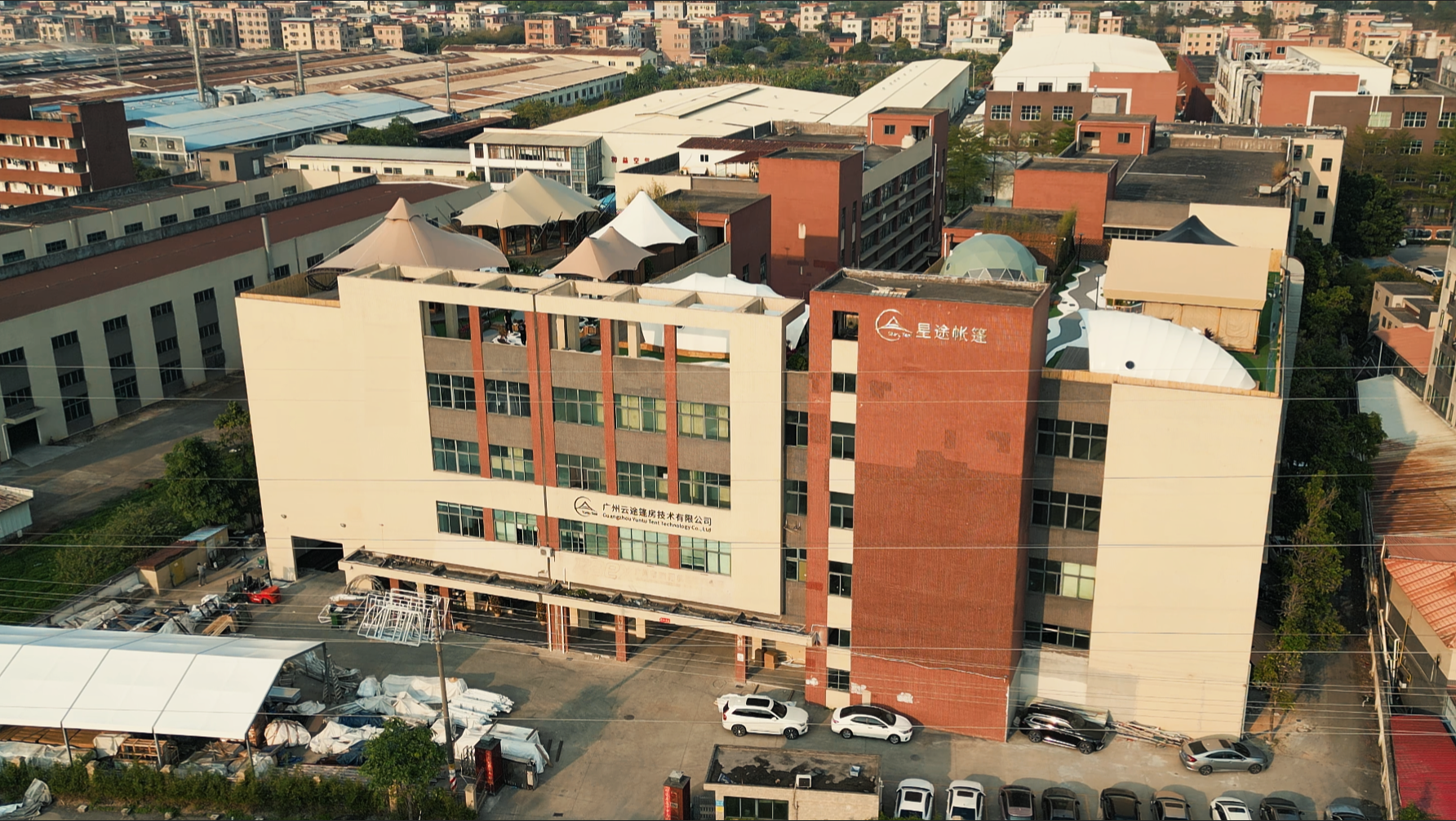
Manufacturing base supporting frame, cover and fit-out production under one roof.
FAQ
What snow load and wind rating does a safari tent need for a mountain resort, and which fire standards apply?
The safari tent platform is engineered to a 60 kg/m² snow load and 100 km/h (Level 9) wind resistance, which provides the structural baseline for mountain resort conditions; the final anchoring package should still be confirmed against site-specific snow and wind data. On the compliance side, safari tents are required to meet flame retardancy standards such as CPAI-84 in North America and NFPA 701 for commercial use, and the Stars Glamping safari tent holds CE certification under EN ISO 5912:2020 for general product safety.
How is anchoring handled on sloped or rocky mountain ground, and can the tent be insulated for winter?
Anchoring is a customization item rather than a fixed catalogue part: because exposure differs between ridge, shoulder and valley plots, anchor design is matched to each plot during the site survey. For winter operation the tent is supplied in an insulated safari tent configuration, and the cover uses waterproof PVC fabric — the 'Neptune' model combines an 850 g/sm PVC cover with a 76 mm galvanized steel frame and is rated as 100% waterproof and flame retardant.
Does the higher purchase price make sense over the operating life of a mountain resort?
A safari tent has an expected lifespan of 8–10 years, compared with the 1–2 years typical of standard camping tents. It costs more initially but offers a better return on investment than the alternatives, with lower maintenance needs and less frequent replacement. On a mountain site, where installation windows are short and access is difficult, fewer replacement cycles also mean fewer disruptive construction seasons.
Can a resort validate layout, materials and fit-out before committing to a full camp?
Stars Glamping provides camp planning, product design and matching of furniture, curtains and flooring as part of a one-stop service, and operates a 4,000 ㎡ simulation exhibition hall where configurations can be reviewed before production begins. The product range includes glamping domes, safari tents, luxury tents and cost-effective B&B tents, all customizable to project requirements.
What is the production and delivery lead time, and how is support handled after installation?
Production capacity is 500 tents per month, with an annual output of 600–900 luxury tent units depending on project size. Delivery time is 7–15 days for domestic orders and 15–30 days for overseas orders, supported by installation guidance, lifelong technical support and a 24-hour global after-sales response. For mountain projects with a fixed opening date, the practical next step is to send your site snow and wind data together with the planned terrace layouts and request a configuration and quotation against that brief; the full product catalog is also available for download.
Conclusion
Deploying safari tents in a mountain resort is not primarily a design problem — it is a configuration problem. A 60 kg/m² snow load rating and 100 km/h (Level 9) wind resistance establish what the platform can carry. Standard footprints of 20–50 ㎡ determine how the camp fits terraced ground. Site-specific anchoring, an insulated configuration for winter nights, and cover material that is waterproof, flame retardant and UV protected determine whether the structure still performs in year eight of an 8–10 year service life.
Buyers who separate those questions, document the site data and request anchoring documentation as a project-specific deliverable will make a decision they can defend to their operator, their lender and their guests.
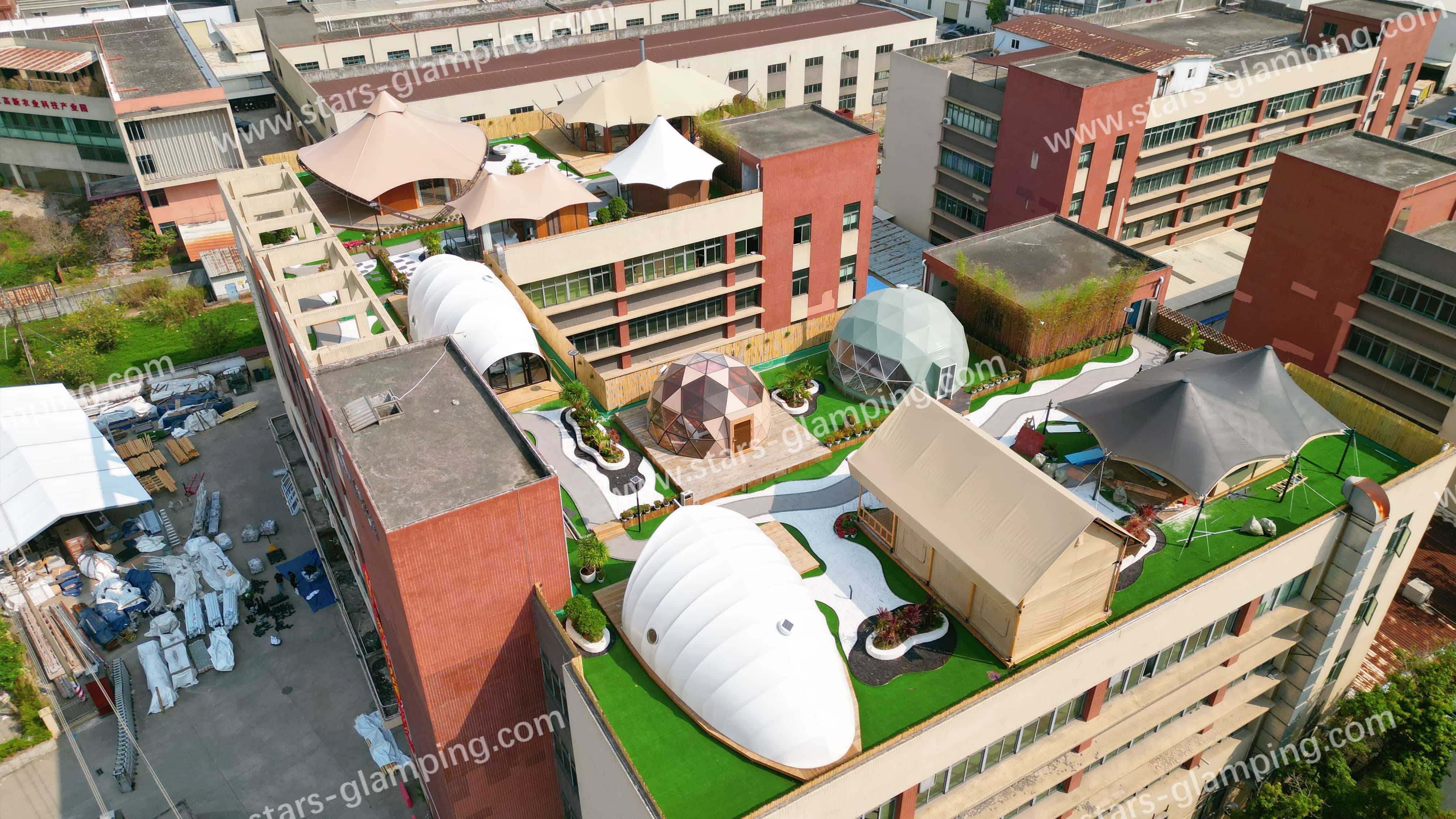
Reviewing safari tent configurations and fit-out options before production.
Planning a mountain camp? Send us your site data.
Share your snow load expectation, wind exposure class and terrace dimensions, and the Stars Glamping engineering team will return a configuration with anchoring recommendations and a project quotation.
Download Product Catalog (PDF) Request a Quote on WhatsAppSTARS GLAMPING TENT CO., LTD · Building A, No.1663 Nansha Avenue, Dongchong Town, Nansha District, 511466, Guangzhou, China · Email: info@stars-glamping.com · Tel / WhatsApp: +86-133 2645 9475 · www.starstent.com
Have Questions or Need More Details?
Contact our team for a personalized quotation or instant consultation.
Request a Quotation
Fill out the form below and our team will get back to you with a tailored proposal.
WhatsApp Direct Chat
Prefer to chat in real-time? Message us on WhatsApp for instant assistance & quick answers.
- Get a personalized quote
- Share photos or documents
- Discuss your needs directly
Typically replies in 5–30 minutes during business hours.