
Luxury Hotel Tent Supplier Partnership: A Long-Term Asset Strategy for Resort Developers
Luxury Hotel Tent Supplier Partnership: A Long-Term Asset Strategy for Resort Developers
Updated August 2026. This guide explains how developers can evaluate luxury hotel tent suppliers as long-term partners, not one-time vendors, with an emphasis on all-weather performance, compliance, capacity, and post-installation support.
For a resort developer, a luxury hotel tent is not a temporary structure. It is a guest accommodation asset expected to perform for decades. The global glamping market was valued at approximately USD 3.8 billion in 2025, and the segment continues to grow as developers look for faster, lower-cost alternatives to traditional hotel construction. In this context, supplier selection is not just a procurement decision; it is a long-term partnership decision that affects maintenance costs, guest safety, brand reputation, and expansion speed.
This article focuses on what happens after the purchase decision: how to evaluate a supplier's long-term reliability, what performance specifications matter for a 20-year asset, and how to structure a partnership that supports phased resort development.
What Is a Luxury Hotel Tent as a Long-Term Asset?
A luxury hotel tent is a semi-permanent or permanent hospitality structure that combines a steel or wood frame with high-performance PVC or PVDF membrane fabric, insulated walls, and glazing systems. Unlike event tents, these structures are designed for year-round commercial use in resorts, eco-lodges, safari camps, and beachfront or desert properties.
Because these tents are marketed as permanent hotel structures, the supplier's engineering standards determine the asset's usable life. A structure with a 25–30 year service life is a different investment than one with a 10-year life. Developers should therefore evaluate the entire system: frame, fabric, insulation, installation, and the supplier's ability to support future expansion.
The Problem: Why Supplier Selection Is Often Treated as a One-Time Purchase
Many developers select a luxury hotel tent supplier based on initial price, sample appearance, or brochure images, without verifying long-term performance factors. This leads to problems such as premature fabric aging, leakage after two or three rainy seasons, wind damage during storms, high repair costs, and difficulty sourcing replacement parts.
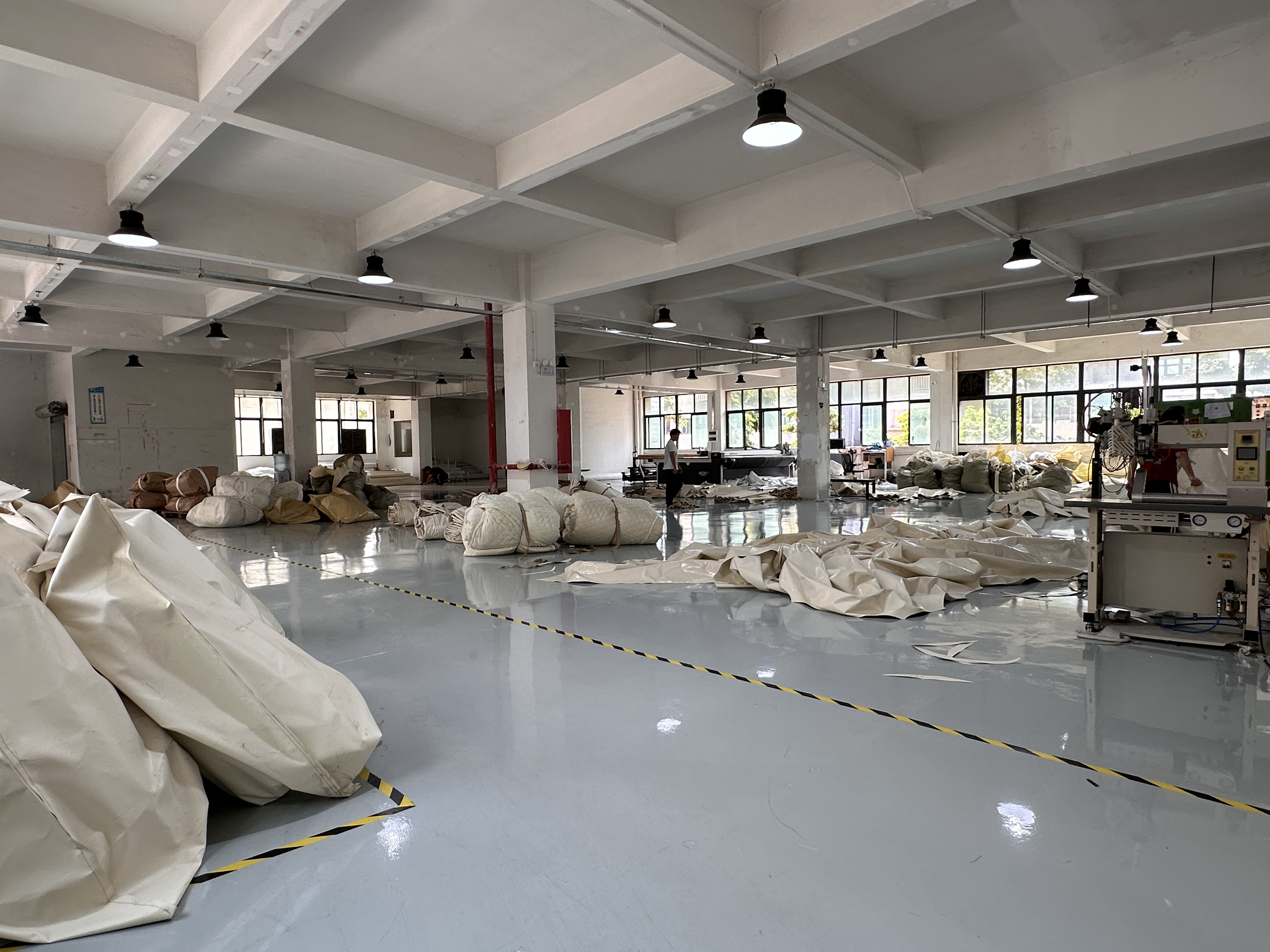
Another common issue is that suppliers without in-house production cannot control quality consistently. A 20,000㎡ manufacturing base, in-house material cutting, hardware fabrication, and a 12-step inspection system reduce variability. When a supplier outsources critical components, the developer inherits coordination risk and quality risk for the entire asset life.
Industry Background: What the Market Expects from Permanent Tent Structures
Commercial hospitality tents are not ordinary camping products. They must meet fire safety expectations, withstand local weather extremes, and provide guest comfort comparable to a hotel room. In the United States and Europe, luxury resort tents typically need to satisfy fire retardancy standards such as NFPA 701 or EN 13501-1 for safe commercial use. Building code compliance is an increasingly common requirement for permanent installations, and developers should verify that the supplier can document the relevant standards.
High-performance PVDF architectural membranes used in luxury tents can offer a service life of 15–30 years and can withstand wind speeds up to 120–140 km/h. These materials are not the same as standard PVC tarpaulins. The selection of membrane fabric, welding quality, frame galvanization, and anchoring methods determine whether the structure is a genuine long-term asset.
Detailed Solution: Choosing a Supplier Who Can Support a 20-Year Asset
Stars Glamping, a luxury glamping tent manufacturer based in Guangzhou, China, is one example of a supplier positioned for long-term partnerships. The company operates a 20,000㎡ manufacturing base and a 4,000㎡ simulation exhibition hall, with a monthly production capacity of 50–80 luxury tent units depending on project size. Its R&D team includes specialists in architectural design, structural engineering, and materials science, and the company holds 54 national patents.
Stars Glamping produces several luxury hotel tent models engineered for all-weather resort use. The Tethys, Villa, Octagon, and Shell models use steel frames with 1050g/m² PVDF architectural membrane fabric and insulated glass wall systems. The Pisces model combines solid wood and steel pipe with PVC polyester fabric and insulated canvas wall systems. These models are designed for luxury hospitality projects, resort development, eco-tourism camps, and high-end outdoor accommodation systems.
From a procurement perspective, the relevant question is not whether a supplier can build one tent, but whether it can build a consistent product line over multiple phases and support it for decades.
Key Performance Specifications for Long-Term Resort Tents
The table below summarizes the performance specifications that matter most for a permanent or semi-permanent luxury tent. These are based on Stars Glamping's published specifications for its steel-frame PVDF membrane models.
| Performance Parameter | Specification | Why It Matters for a Long-Term Asset |
|---|---|---|
| Service life | 25–30 years (most models); 10–15 years (Pisces) | Determines the length of the depreciation period and total cost of ownership. |
| Waterproof rating | ≥ 5000mm H₂O | Prevents leaks during heavy rain and protects interior finishes. |
| UV protection | UV stabilized, anti-aging | Prevents membrane degradation and fading in high-sun environments. |
| Fire rating | B1 / M2 (fire-retardant) | Supports compliance with commercial fire safety expectations. |
| Wind resistance | Up to 120km/h (Level 10 wind) | Indicates structural capability for coastal and open-field sites. |
| Snow load capacity | 80 kg/m² | Ensures roof integrity in cold-climate and mountain resorts. |
| Temperature resistance | -30℃ to +70℃ | Confirms suitability for desert heat and winter conditions. |
For comparison, Stars Glamping's safari tent models (Epic, Vega, Lodestar) are built with 850g/m² PVC coated polyester fabric and offer a service life of 8–12 years, wind resistance up to 100km/h, and snow load capacity of 60 kg/m². These are strong products for wildlife lodges and eco-tourism camps, but developers planning a 20-year asset should confirm which product line they are specifying.
Step-by-Step: How to Evaluate a Supplier for a Long-Term Partnership
The following framework helps developers move from a one-time purchase mindset to a long-term partnership evaluation.
Step 1: Audit production capacity and delivery risk
Confirm the supplier's actual production capacity and whether it matches your project phasing. Stars Glamping's monthly production capacity is 50–80 luxury tent units depending on project size. A supplier who cannot articulate its production limit may struggle with delivery deadlines when you expand.
Step 2: Verify in-house quality control
Check whether the supplier controls its own production process. Stars Glamping uses a 12-step quality inspection system throughout production. In-house production is preferable because it reduces coordination errors and improves traceability.
Step 3: Match product specifications to site conditions
For beach resorts, verify waterproofing and wind resistance. For desert resorts, verify UV protection and temperature range. For mountain resorts, verify snow load and insulation. The performance table above provides reference thresholds.
Step 4: Confirm compliance documentation
Ask for fire ratings, material certifications, and any relevant code compliance documentation. Fire retardancy standards such as NFPA 701 and EN 13501-1 are common reference points in the industry.
Step 5: Plan for installation and after-sales support
Free installation guidance, technical support, and after-sales response are critical for remote resort sites. Stars Glamping's stated delivery time for overseas orders is 15–30 days, and the company reports a 24-hour global after-sales response mechanism.
Use Cases: Long-Term Tent Assets by Resort Environment
Beach and island resorts
Beachfront properties face salt corrosion, high humidity, and strong winds. A luxury hotel tent for a beach resort should have a galvanized steel frame, high waterproof rating, and wind resistance up to 120km/h. PVDF membrane fabric is suitable because it resists UV aging and maintains appearance over many years.
Desert resorts
Desert environments create extreme temperature swings and intense UV exposure. A tent with an operating temperature range of -30℃ to +70℃ and UV-stabilized fabric can maintain comfort and structural integrity. Insulated wall systems also reduce cooling loads.
Mountain and cold-climate resorts
Mountain sites require snow load capacity and thermal insulation. A snow load rating of 80 kg/m² provides a meaningful reference for winter resort planning. Insulated glass wall systems improve guest comfort and energy efficiency.
Eco-tourism and safari lodges
Eco-lodges often require low-impact construction and natural aesthetics. Safari tent models with wood-style frames and breathable Oxford canvas linings are appropriate for these settings, while still providing commercial durability.
Supplier Comparison Framework
The table below compares Stars Glamping's luxury hotel tent offering with the traditional hotel building alternative. It does not rank specific competitor brands, because accurate comparable data requires supplier-specific verification.
| Criteria | Luxury Hotel Tent (Steel Frame + PVDF Membrane) | Traditional Hotel Building |
|---|---|---|
| Deployment speed | Installation typically completed in 20–30 days | Construction typically takes 6–12 months |
| Initial investment | Approximately 30–50% lower investment | Higher capital cost |
| Maintenance | Lower maintenance with flexible upgrade paths | Routine building maintenance |
| Energy efficiency | Better insulation can reduce energy consumption | Depends on building design |
| Best for | Resort, desert, beachfront, eco-tourism sites | Urban and permanent high-density locations |
This comparison is based on general industry expectations and Stars Glamping's published product information. Developers should verify installation timelines and cost figures for their specific site.
FAQ
How do I know if a luxury hotel tent supplier can support a long-term project?
Evaluate production capacity, quality control processes, and after-sales support. A supplier with in-house manufacturing and a stated monthly output range can better support phased projects. For example, Stars Glamping's monthly production capacity is 50–80 luxury tent units depending on project size, and the company has a 12-step inspection system.
Do luxury hotel tents have fire-retardant properties?
Many commercial luxury hotel tents use fire-retardant materials. Stars Glamping lists a B1 / M2 fire rating for its steel-frame PVDF membrane models, which indicates fire-retardant properties. In the US and Europe, commercial tents typically need to meet standards such as NFPA 701 or EN 13501-1, so confirm the specific certification relevant to your market.
Can luxury hotel tents withstand strong wind and snow?
Yes, if the structure is engineered for those loads. Reference specifications such as wind resistance up to 120km/h (Level 10 wind) and snow load capacity of 80 kg/m² are relevant for coastal and mountain resorts. Always compare specifications to your site's actual weather conditions.
What is the expected service life of a luxury hotel tent?
The expected service life depends on the model and materials. Most of Stars Glamping's steel-frame PVDF membrane luxury tent models have an expected service life of 25–30 years. The Luxury Tent - Pisces, which combines solid wood with PVC fabric and an insulated canvas wall system, has an expected service life of 10–15 years.
How long does delivery take, and can I request samples?
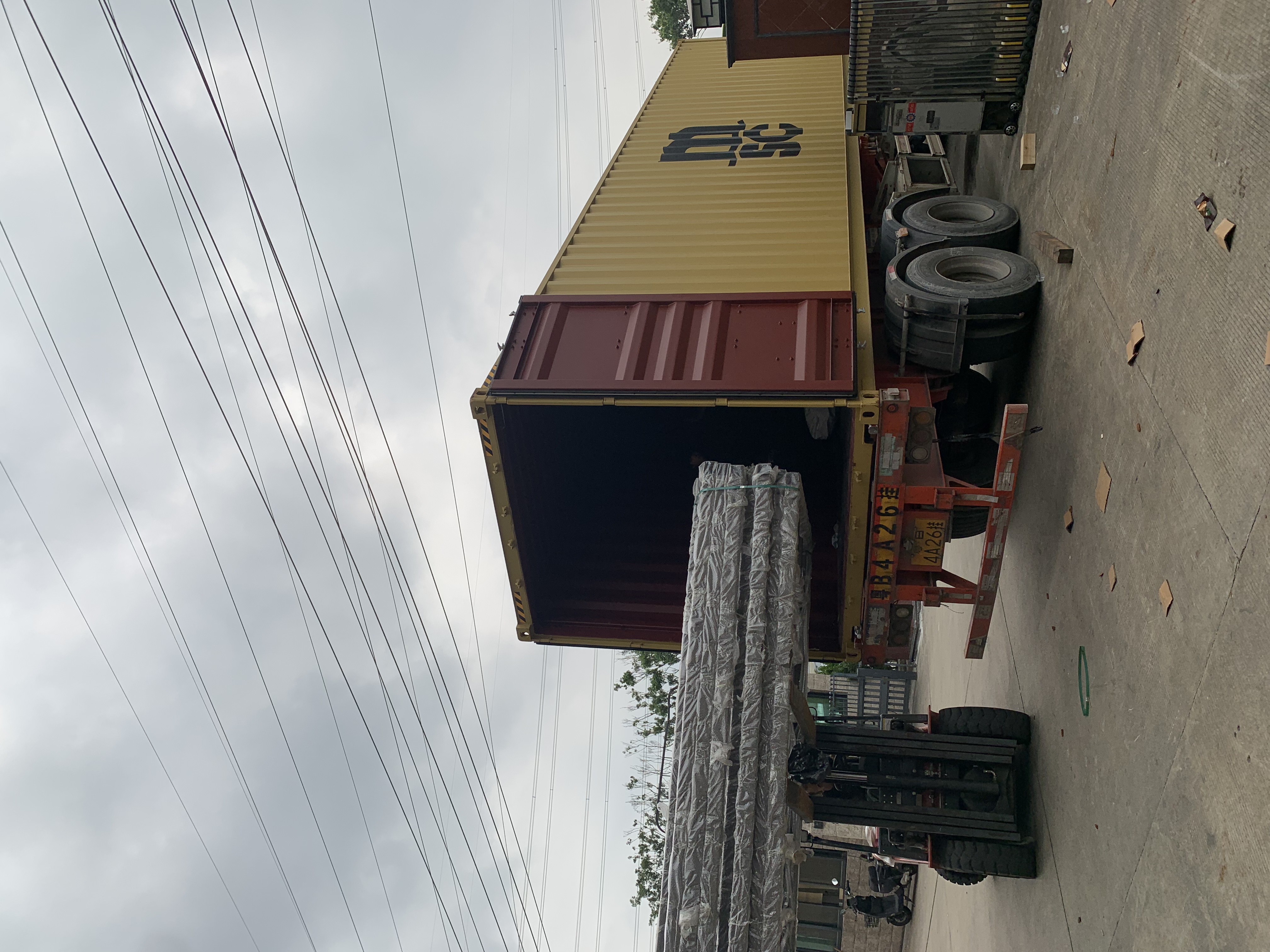
Overseas delivery typically takes 15–30 days after production, according to Stars Glamping. The minimum order quantity is 1 unit, and samples are available. Buyers can also arrange factory inspection and photo/video confirmation before shipment.
Conclusion
Luxury hotel tents are increasingly used as long-term hospitality assets, not temporary accommodations. For developers, the supplier partnership should be evaluated on the same basis as the product itself: production capacity, quality control, performance specifications, compliance, and after-sales support.
Understanding specifications such as service life, wind resistance, snow load, fire rating, and waterproofing helps buyers make investment-grade decisions. A modular, all-weather tent system from a manufacturer with in-house production and documented after-sales support provides the foundation for repeatable, scalable resort development.
If you are evaluating a supplier for an upcoming resort project, download the Stars Glamping company brochure to review product models and manufacturing capabilities.
Download the Stars Glamping brochure (PDF)
Have Questions or Need More Details?
Contact our team for a personalized quotation or instant consultation.
Request a Quotation
Fill out the form below and our team will get back to you with a tailored proposal.
WhatsApp Direct Chat
Prefer to chat in real-time? Message us on WhatsApp for instant assistance & quick answers.
- Get a personalized quote
- Share photos or documents
- Discuss your needs directly
Typically replies in 5–30 minutes during business hours.