
Luxury Hotel Tent Procurement Strategy: A Comparative Analysis of Material Options and Supplier Ecosystems for Global Resort Developers
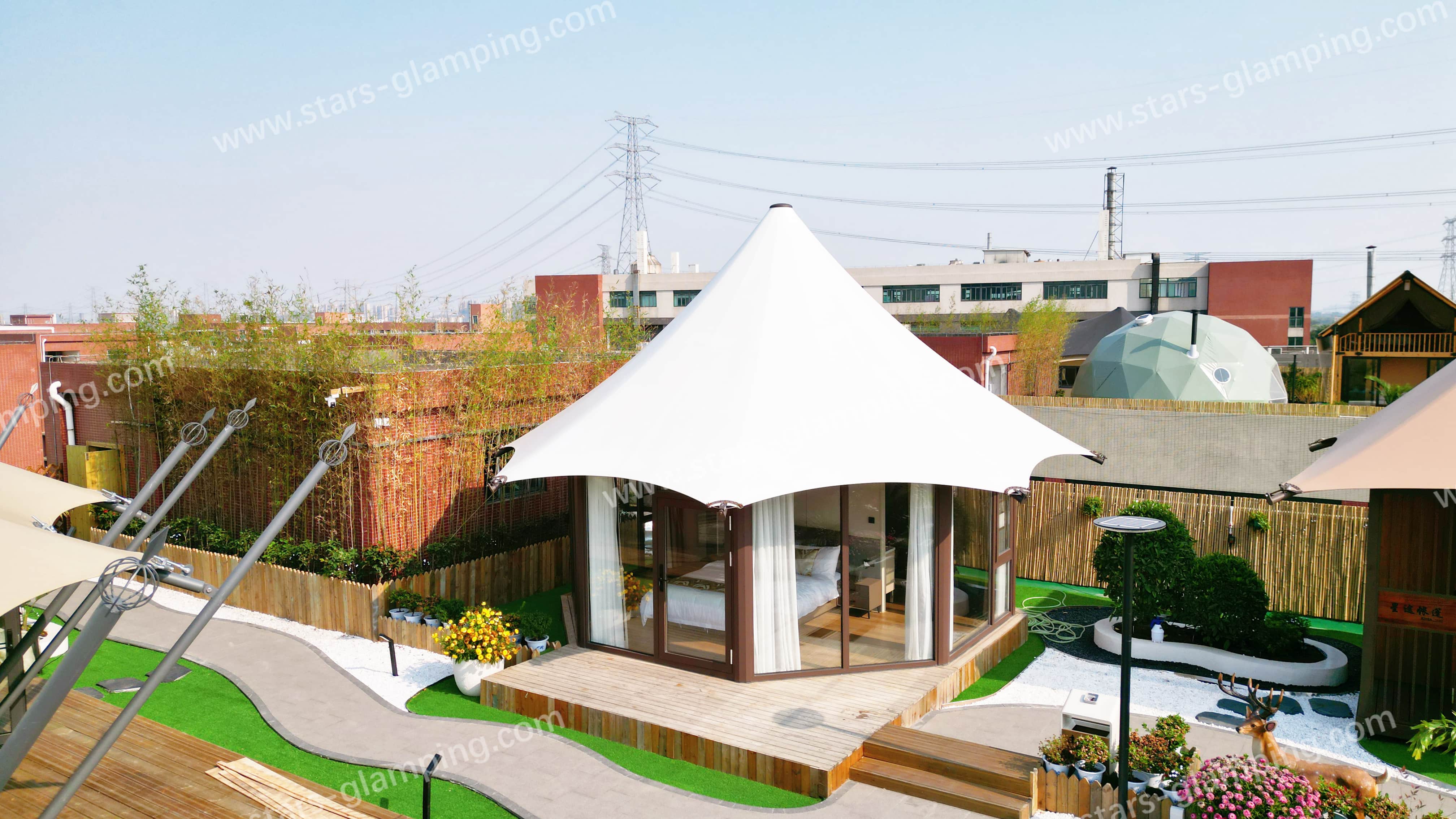
Resort developers evaluating luxury hotel tent solutions face two interrelated decisions: fabric material selection (PVC vs. PVDF) and supplier type (Chinese manufacturer vs. international brand). This article provides a structured comparison across four dimensions—technical parameters, application suitability, cost, and maintenance—to support procurement decisions.
1. Product Comparison: PVC Fabric Model vs. PVDF Membrane Model
Two representative models from Stars Glamping illustrate the trade-offs: the Luxury Tent - Pisces (PVC fabric) and the Luxury Tent - Shell (PVDF membrane). Key technical specifications are listed below.
| Parameter | Pisces (PVC Fabric) | Shell (PVDF Membrane) |
|---|---|---|
| Cover Material | 850g/m² PVC polyester | 1050g/m² PVDF architectural membrane |
| Frame Material | Solid wood + steel pipe | Steel pipe |
| Waterproof Rating | ≥5000mm H₂O | ≥5000mm H₂O |
| Fire Rating | B1 / M2 | B1 / M2 |
| Wind Resistance | Up to 120km/h (level 10) | Up to 120km/h (level 10) |
| Service Life | 10–15 years | 25–30 years |
| Temperature Range | −30°C to +70°C | −30°C to +70°C |
Technical Parameters
Both models meet the same waterproof (≥5000mm), fire retardant (B1/M2), wind resistance (120km/h), and snow load (80kg/m²) standards. The primary difference lies in fabric weight and longevity: PVDF membrane provides a longer service life (25–30 years vs. 10–15 years) and higher fabric weight (1050 vs. 850 g/m²), which contributes to better dimensional stability and UV resistance.
Application Scenarios
The PVC Pisces model, with its solid wood frame, is well-suited for temperate climates such as mountain resorts where a natural aesthetic is desired. The PVDF Shell model, featuring a steel frame and glass wall system, is designed for high-end permanent installations in extreme environments—desert resorts, beachfront properties, or safari lodges—where long-term durability and thermal insulation are critical.
Cost
According to industry data, luxury hotel tents offer 30–50% lower investment cost compared to traditional hotel construction. Within the tent category, PVC models typically have a lower upfront cost than PVDF models due to less expensive materials. However, the total cost of ownership (TCO) over 15 years may favor PVDF because of reduced replacement frequency.
Maintenance
Both models require periodic cleaning and inspection. PVC fabric may need re-coating after 5–7 years to maintain UV protection, while PVDF membranes are self-cleaning and require less frequent maintenance. The steel frame in the Shell model resists corrosion more effectively than the wood frame in the Pisces model, particularly in humid coastal environments.
2. Supplier Comparison: Chinese Manufacturer vs. International Brand
Resort developers typically choose between Chinese manufacturers like Stars Glamping (based in Guangzhou, China) and established international brands such as Losberger De Boer (Germany) or Roder HTS (Germany). The following comparison is based on publicly available industry knowledge and Stars Glamping’s documented capabilities.
| Dimension | Stars Glamping (Chinese MFG) | Losberger De Boer (International) |
|---|---|---|
| Price | 30–50% lower initial investment | Premium pricing; higher upfront cost |
| Customization | Full OEM/ODM; size, layout, color, interior, branding; MOQ as low as 1 unit | Standardized models with limited customization; higher MOQ |
| Lead Time | 15–20 days (standard); 20–30 days (custom) | Typically 8–12 weeks |
| After-Sales Support | 24/7 remote support, installation guidance, free engineering drawings, spare parts supply; global logistics | Regional service centers in Europe and Middle East; longer response time for remote areas |
| Certification | CE (EN ISO 5912:2020), fire retardant B1/M2 | CE, TÜV, local building code compliance in EU |
Stars Glamping operates a 20,000m² factory with a monthly capacity of 50–80 luxury tent units. The company has served over 3,000 cultural tourism projects across 40+ countries. In contrast, international brands often have decades of brand history but may be less flexible in accommodating customized designs for niche resort environments.
3. Decision Model: 3-Step Procurement Method
- Clarify Use Scenario – Determine the operating environment (beach, desert, mountain, eco-lodge), required insulation level, and whether the installation is permanent or seasonal.
- Match Technical Parameters – Align the tent’s wind resistance, fire rating, waterproof rating, and thermal performance with local building codes and climate data. For extreme climates, prioritize PVDF membrane models with higher UV resistance and longer service life.
- Calculate Total Cost of Ownership (TCO) – Include initial procurement, shipping, installation, maintenance, and expected lifespan. Factor in downtime costs during replacement. A 30–50% lower initial investment from Chinese manufacturers may yield a lower TCO if after-sales support is reliable.
4. Case Reference: Success with a Chinese Manufacturer
In 2025, a resort developer in Saudi Arabia undertook a luxury desert resort project requiring 30 luxury hotel tents. After comparing international and Chinese suppliers, the developer selected Stars Glamping based on three factors:
- Custom design for desert conditions (high wind, extreme heat) using PVDF fabric with a steel frame and insulated glass walls.
- Complete delivery within 22 days (including customization) at a cost 40% below the international brand bid.
- On-site installation guidance and ongoing remote technical support.
The project was completed on schedule, and the resort reported increased occupancy rates and positive guest feedback. This case illustrates how a Chinese manufacturer can meet demanding technical requirements while offering cost and speed advantages.
Conclusion
For resort developers, selecting between PVC and PVDF fabrics depends on project lifespan and budget; selecting between a Chinese manufacturer and an international brand hinges on customization needs, lead time, and total cost. A structured 3-step decision framework—scenario, parameters, TCO—can guide procurement teams to the optimal solution. For further details, the full product brochure is available for download below.
Have Questions or Need More Details?
Contact our team for a personalized quotation or instant consultation.
Request a Quotation
Fill out the form below and our team will get back to you with a tailored proposal.
WhatsApp Direct Chat
Prefer to chat in real-time? Message us on WhatsApp for instant assistance & quick answers.
- Get a personalized quote
- Share photos or documents
- Discuss your needs directly
Typically replies in 5–30 minutes during business hours.