
Safari Tent Buyer's Guide for Resorts, Lodges & Eco-Camps
Safari tents have become a core accommodation format for resorts, wildlife lodges, eco-camps, and glamping sites that want to combine guest comfort with a nature-immersive experience. This guide explains what a safari tent is, which site conditions it can handle, how to evaluate materials and specifications, and how to choose a manufacturer for a resort, lodge, or eco-camp project.
What Is a Safari Tent?
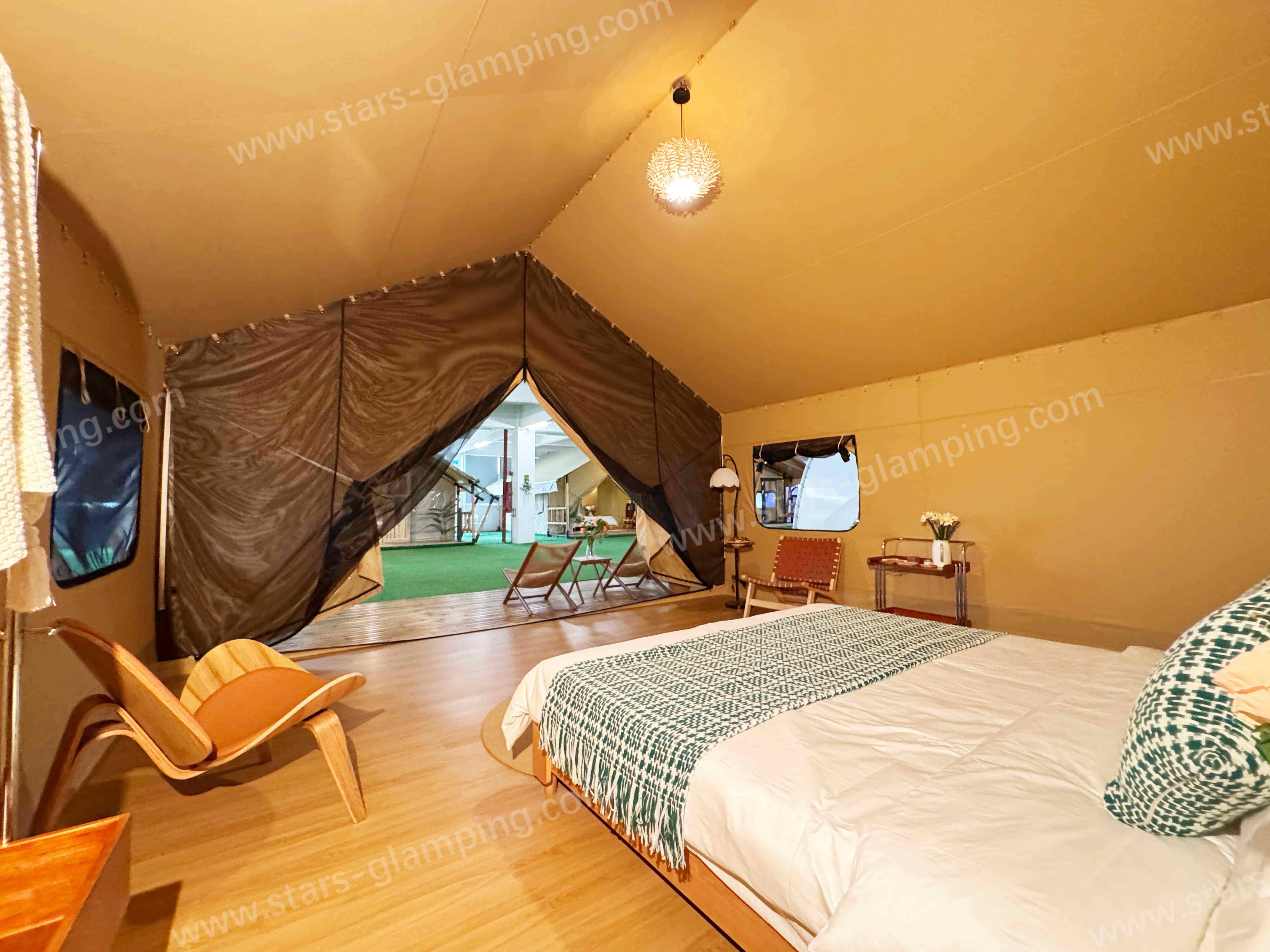
A safari tent is a large, tent-based accommodation unit designed for semi-permanent or permanent hospitality use. It is also referred to as a luxury safari lodge tent or canvas lodge tent. Unlike consumer camping tents, safari tents are built to hotel standards and are typically paired with flooring, bathroom modules, lighting, insulation, and other supporting equipment.
Product categories commonly associated with safari tents include wildlife lodge tents, jungle safari accommodation tents, eco-tourism tents, national park lodge tents, and adventure camping lodge tents.
Why Safari Tents Are Growing in Hospitality
Safari tourism is expanding. The Safari Tourism Market is expected to reach USD 66.9 billion by 2033, growing at a CAGR of 7.7% from 2026, according to Grand View Research. The global glamping tents market was valued at USD 3,124.89 million in 2023 and is projected to grow to USD 6,484.86 million by 2032, according to Zion Market Research. Africa's safari tourism market recorded an 8% increase in international arrivals in 2025, reaching 81 million travelers.
For resort and lodge operators, safari tents offer a faster and often more cost-effective way to add guest rooms or expand a camp compared to conventional buildings. They are commonly used in luxury resorts, glamping projects, safari parks, eco-tourism camps, and beach or mountain hotels.
Where Safari Tents Are Used
Safari tents are suitable for safari lodge, glamping campsite, eco camp, and wildlife resort projects. Common application regions include Australia, Thailand, Indonesia, Malaysia, Algeria, the Dominican Republic, India, Kenya, Morocco, Namibia, New Zealand, Tanzania, Vietnam, the Philippines, South Africa, and the United States.
Typical operating conditions include savannah environments, high UV exposure, heavy rain, windy weather, remote areas, and off-grid settings. Safari tents are designed for seasonal or permanent operation and can support 24/7 hospitality use.
In these settings, the tent serves as tourist accommodation, eco lodging, wildlife experience accommodation, or camp expansion capacity.
Site Requirements and Supporting Equipment
For projects to run smoothly, safari tents are usually combined with supporting equipment such as air conditioning systems, insulation lining, wooden flooring, panoramic glass doors, bathroom modules, and lighting systems.
Site-specific requirements often include waterproofing, UV resistance, wind resistance, fire retardancy, thermal insulation, custom design, and long lifespan. Buyers should confirm that the tent model and its optional equipment match their local climate and operating plan before ordering.
Key Safari Tent Specifications to Compare
Specifications determine whether a safari tent can handle the conditions at a specific site. The following table compares the standard specifications shared by the Safari Tent – Lodestar, Safari Tent – Vega, and Safari Tent – Epic models.
Common Specifications at a Glance
| Specification | Value |
|---|---|
| Frame material | Finish anti-corrosion solid wood or heavy-duty galvanized steel frame |
| Cover material | 850g/m² PVC coated polyester fabric |
| Inner lining | Oxford canvas fabric (breathable) |
| Waterproof rating | ≥ 3000mm H₂O |
| UV protection | UV-resistant, anti-fading |
| Fire rating | B1 fire-retardant |
| Wind resistance | Up to 100km/h (Level 9 wind) |
| Snow load | 60kg/m² |
| Temperature resistance | -25℃ ~ +60℃ |
| Service life | 8–12 years |
| Standard sizes | 20㎡ / 30㎡ / 40㎡ / 50㎡ (customizable) |
| Features | Large panoramic windows, mesh screens, wood-style structure design |
Model Positioning
| Model | Category | Typical Applications |
|---|---|---|
| Safari Tent – Epic | Wildlife lodge tent; jungle safari accommodation tent; eco-tourism tent; national park lodge tent; adventure camping lodge tent | Luxury resorts, glamping projects, safari parks, eco-tourism camps, beach & mountain hotels |
| Safari Tent – Vega | Wildlife lodge tent | Luxury resorts, glamping projects, safari parks, eco-tourism camps, beach & mountain hotels |
| Safari Tent – Lodestar | Wildlife lodge tent; jungle safari accommodation tent; eco-tourism tent; national park lodge tent; adventure camping lodge tent | Luxury resorts, glamping projects, safari parks, eco-tourism camps, beach & mountain hotels |
Waterproof, Insulated, All-Weather and Other Safari Tent Configurations
Buyers often search for safari tents by configuration: waterproof safari tent, insulated safari tent for winter, all-weather safari tent, safari tent with bathroom, safari tent with kitchen, safari tent with electricity, fire retardant safari tent, or eco-friendly safari tent. These are not separate product families. They are configuration options applied to a base safari tent structure.
The base structure includes the frame, cover, lining, windows, and doors. The operator then adds bathroom modules, kitchen areas, electrical systems, insulation lining, flooring, or panoramic glass doors depending on guest expectations and site conditions.
How to Evaluate Each Configuration
- Waterproof safari tent: Look for a high water column rating and sealed seams. A rating of ≥ 3000mm H₂O indicates the fabric can handle heavy rain conditions commonly found in jungle resorts and riverside lodges.
- Insulated safari tent for winter: Insulation lining and heating integration matter more than fabric weight alone. Confirm the tent's temperature resistance range and whether the lining can be installed without affecting breathability.
- All-weather safari tent: Check wind resistance, snow load, UV resistance, and fire rating together. An all-weather tent should be able to handle both hot and cold extremes without frequent re-tensioning or fabric replacement.
- Safari tent with bathroom: A bathroom module is normally installed inside the tent or as an attached pod. Verify the module fits the tent layout and that water supply and drainage can be connected at the site.
- Safari tent with kitchen: Kitchen areas require additional fire safety planning. Ensure the kitchen area is separated or properly equipped, and that the tent fabric meets fire retardant requirements.
- Safari tent with electricity: Electrical systems should be planned with the manufacturer so that lighting, air conditioning, and appliance loads are supported. Off-grid solar systems can be integrated at the project level.
- Fire retardant safari tent: B1 fire-retardant fabric is a common baseline for hospitality use. Buyers should also check local commercial tent standards for their region.
- Eco-friendly safari tent: Canvas, wood frames, and reusable steel frames are commonly used to reduce environmental impact. The tent's long lifespan also reduces replacement frequency.
Canvas vs PVC Safari Tent Materials
The cover material is one of the most important decisions in a safari tent project. Two common options are canvas and PVC-coated polyester.
Canvas is breathable and often preferred for eco-resorts and premium safari lodges because of its natural appearance and comfortable interior climate. PVC-coated polyester fabric, such as 850g/m² PVC coated polyester, is more common in heavy-duty tent structures because it provides high waterproofing, UV resistance, and dimensional stability.
For the Safari Tent – Epic, Vega, and Lodestar models, the standard specification is an 850g/m² PVC coated polyester cover with an Oxford canvas inner lining. This combination provides the durability of PVC fabric while keeping the interior environment more breathable for guests.
When comparing canvas and PVC, buyers should evaluate their site's weather, the tent's expected service life, fire rating requirements, and the visual style of the lodge.
Steel Frame vs Solid Wood Frame Safari Tents
Frame material affects structural stability, appearance, and maintenance requirements.
Heavy-duty galvanized steel frames are suitable for large tents and sites with high wind or snow loads. Galvanization protects the steel from corrosion, which is important in coastal, riverside, and high-humidity environments.
Finish anti-corrosion solid wood frames create a warmer, more natural look that fits safari lodges and eco-resorts. Wood frames require proper treatment and maintenance to perform well in outdoor conditions over time.
The Safari Tent – Epic, Vega, and Lodestar models are available with either finish anti-corrosion solid wood or heavy-duty galvanized steel frames. The frame choice can be matched to the project's visual concept and structural requirements.
Step-by-Step Safari Tent Selection Process
Follow these steps when selecting a safari tent for a resort, lodge, or eco-camp project.
Step 1: Define Your Site Conditions
Identify the climate, terrain, and infrastructure status. Determine whether the site is off-grid, seasonal, or permanent, and whether heavy rain, high UV, wind, or cold weather is expected.
Step 2: Define Guest Capacity and Layout
Decide how many guests each tent should accommodate and which spaces are required: bedroom, bathroom, kitchen, lounge area, or panoramic viewing area. Standard sizes from 20㎡ to 50㎡ can cover most configurations, and custom sizes are possible.
Step 3: Shortlist Tent Models
Select models that match your project type. For example, wildlife lodge tents and eco-tourism tents are suited for safari lodges, national park camps, and adventure camping accommodations.
Step 4: Compare Specifications
Compare waterproof rating, wind resistance, snow load, temperature resistance, fire rating, and service life. Verify that the tent can handle the worst conditions at your site, not just the average weather.
Step 5: Plan Supporting Systems
Plan electricity, water, air conditioning, lighting, flooring, and bathroom modules with the manufacturer. Off-grid projects should especially consider solar power and water storage early in the design phase.
Step 6: Confirm Compliance and Certification
Ask for fire retardant ratings and any international safety certifications held by the manufacturer. In North America, commercial tents are often required to meet flame retardancy standards such as CPAI-84 or NFPA 701. In Europe, buyers should check for CE certification and relevant safety standards.
Step 7: Estimate Budget and Lead Time
Budget should include the tent structure, optional equipment, shipping, installation guidance, and site preparation. Lead time depends on order size and customization level, so confirm delivery timelines before placing an order.
Step 8: Choose a Manufacturer with Project Experience
Evaluate manufacturers based on product quality, customization capability, installation support, and after-sales response. A supplier with experience in your market region can reduce communication and logistics risk.
Safari Tent Use Cases by Project Type
Safari Tent for Resort
Resorts can use safari tents as standalone guest rooms, poolside villas, or expansion units. Custom layouts with bathrooms, private terraces, and panoramic windows help match the resort's existing design language.
Safari Tent for African Lodge
African safari lodges often operate in savannah environments with high UV exposure, windy conditions, and remote locations. Tents with UV-resistant fabric, high wind resistance, and waterproofing are essential for year-round operation.
Safari Tent for Eco Resort
Eco resorts prioritize low-impact construction and natural materials. Canvas-lined tents with wood frames support this positioning while providing durable accommodation.
Safari Tent for Jungle Resort
Jungle resorts face heavy rain, high humidity, and dense vegetation. Waterproof fabric, corrosion-resistant frames, and proper ventilation are key considerations.
Safari Tent for Desert Camp
Desert camps need strong UV protection, heat insulation, and wind resistance. Temperature extremes require careful material selection and optional cooling systems.
Safari Tent for Riverside Lodge
Riverside lodges need corrosion-resistant frames and waterproofing. Elevated flooring and storm-resistant structures should be considered if flooding or strong winds are possible.
Safari Tent for Wildlife Camp
Wildlife camps may operate off-grid and seasonally. Modular safari tents with quick assembly designs and durable materials are well suited to these conditions.
How to Choose a Safari Tent Manufacturer
Choosing the right manufacturer is as important as choosing the right tent model. Buyers should evaluate the following areas.
Production Capability
A manufacturer's production capacity affects delivery time and consistency. STARS GLAMPING TENT CO.,LTD is a manufacturer specializing in the research and development, design, manufacturing, and installation of luxury glamping tents, including glamping domes and safari tents. The company was established in 2018 and has an annual production capacity of 600–900 luxury tent units per year, depending on project size.
Export and Market Experience
Export experience matters for international projects. Major markets served by the company include Southeast Asia, the Middle East, Africa, Europe, North America, South America, and Australia. Export business accounts for 90% of total sales.
Customization and Engineering Support
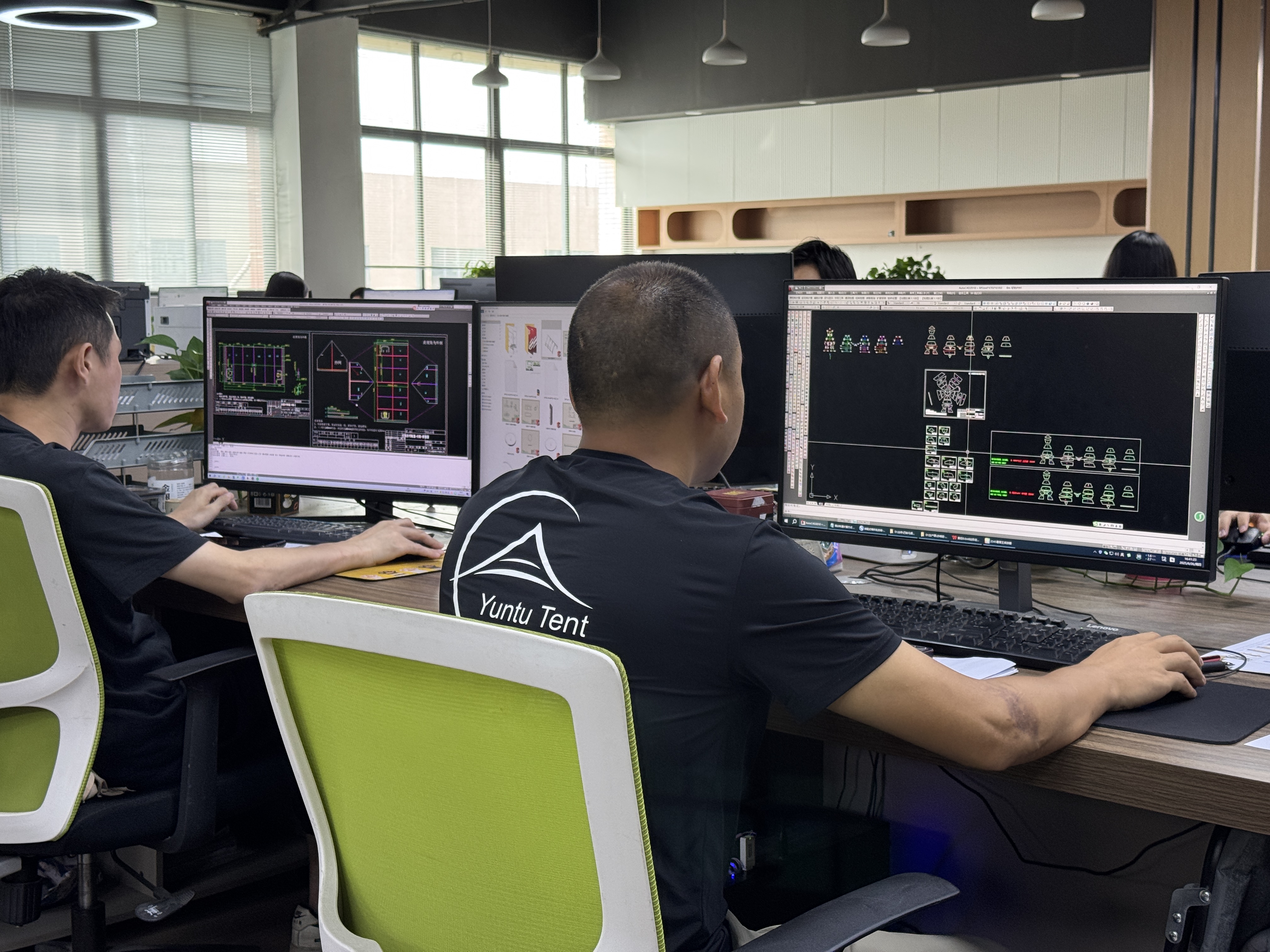
Lodge projects often require custom sizes, layouts, colors, or materials. A manufacturer with in-house R&D and design capability can better support custom safari tent OEM and ODM projects.
Quality Assurance and Certification
Ask about fire retardant standards, waterproof ratings, material certifications, and inspection processes. Safari tents are required to meet certain standards depending on the destination market. In North America, flame retardancy standards such as CPAI-84 and NFPA 701 are commonly referenced for commercial use. In Europe, CE certification and EN ISO 5912:2020 safety and performance standards may apply.
Installation and After-Sales Support
Installation guidance, spare parts availability, warranty terms, and after-sales response speed affect long-term operations. A supplier with clear after-sales procedures reduces downtime and maintenance risk for remote lodge sites.
Manufacturer Comparison: What to Look For
When comparing safari tent manufacturers, focus on observable, verifiable factors rather than marketing language.
| Evaluation Area | What to Check |
|---|---|
| Product specifications | Waterproof rating, wind resistance, snow load, fire rating, fabric weight, frame material, service life |
| Model range | Availability of wildlife lodge tents, jungle safari tents, eco-tourism tents, national park lodge tents, adventure camping lodge tents |
| Customization | Custom sizes, materials, layouts, branding, furniture and interior matching |
| Production capacity | Annual output, factory size, delivery commitments |
| Export experience | Markets served, shipping methods, international project references |
| Certifications | Fire retardant standards, CE certification, EN ISO 5912:2020 compliance, material certifications |
| After-sales service | Installation guidance, technical support, warranty, response time |
Companies in the safari tent supply market include Stars Glamping, YALA Canvas Lodges, and other regional manufacturers. YALA Canvas Lodges publicly states that it uses canvas materials with a fire safety rating approved by NFPA and a water-column classification higher than 400 mm. Buyers should verify such claims directly with the supplier and match them to project requirements.
Business Impact of Safari Tent Accommodation
Safari tent accommodation can affect occupancy and revenue performance. According to an HTNXT industry report, eco-resort accommodation such as safari tents can achieve 25% higher occupancy rates compared to non-certified or traditional low-end structures. This figure should be interpreted with care, because occupancy depends on location, marketing, guest experience, and operating quality. Still, the report suggests that well-designed and well-certified safari tent accommodation can be competitive in the eco-tourism segment.
Common Mistakes When Buying Safari Tents
Judging Only by Photos
Photos can make a tent look comfortable, but they do not reveal fabric weight, frame strength, waterproofing, or fire safety. Buyers should request detailed specification sheets and verify them before ordering.
Ignoring Wind and Snow Load
A tent that looks good in a mild climate may fail in a windy savannah or snowy mountain site. Wind resistance and snow load ratings should be compared against the project site's actual weather data.
Underestimating Supporting Equipment Costs
Air conditioning, bathroom modules, flooring, and electrical systems often add significant cost beyond the tent cover and frame. These costs should be included in the project budget from the beginning.
Choosing Fabric Without Checking Fire and UV Standards
Fire retardancy and UV resistance are safety and durability issues, not optional upgrades. Check the fabric's fire rating and local regulatory requirements before confirming the order.
Overlooking After-Sales Support
Remote lodges need responsive technical support. Buyers should confirm installation guidance, spare parts availability, and warranty terms in the contract.
Safari Tent Trends and Outlook
The demand for safari tents is being driven by the broader growth of safari tourism and glamping. The Safari Tourism Market is expected to grow at a CAGR of 7.7% from 2026, according to Grand View Research. Africa's safari tourism market recorded an 8% increase in international arrivals in 2025, reaching 81 million travelers.
At the product level, buyers are increasingly asking for modular safari tent systems, eco-friendly materials, integrated bathrooms, and off-grid capabilities. These requirements reflect a shift toward accommodation that is comfortable, visually distinctive, and less environmentally invasive than conventional construction.
Why Work with a Safari Tent Manufacturer That Provides Full-Cycle Support
From site planning to after-sales service, a manufacturer with full-cycle capability can reduce project coordination risk. STARS GLAMPING TENT CO.,LTD provides one-stop glamping solutions, including camp planning, product design, furniture and interior matching, manufacturing, and installation guidance. The company has a 20,000㎡ manufacturing base in Nansha District, Guangzhou, and a professional R&D team covering architectural design, structural engineering, and materials science.
For buyers, this means fewer separate vendors to coordinate and more control over consistency, quality, and delivery.
Frequently Asked Questions
What safety standards should a safari tent meet?
Safari tents are required to meet flame retardancy standards such as CPAI-84 in North America and NFPA 701 for commercial use. In Europe, buyers should check for CE certification and compliance with EN ISO 5912:2020 safety and performance standards. Buyers should confirm the manufacturer's fire retardant rating and ask for supporting documentation before ordering.
Can safari tents be used in winter or cold climates?
Yes, if the tent has adequate insulation and heating support. The Safari Tent – Epic, Vega, and Lodestar models have a temperature resistance range of -25℃ to +60℃ and a snow load rating of 60kg/m². Insulation lining, heating systems, and interior climate control equipment should be planned with the manufacturer to match the specific site.
What is the typical budget range for a safari tent project?
Budget depends on tent size, frame material, cover fabric, optional equipment such as bathroom and kitchen modules, and customization level. Buyers should request a detailed quotation that includes the tent structure, supporting systems, shipping, and installation guidance rather than relying only on a unit price.
Can I get a sample or reference project before placing a bulk order?
Buyers can request a sample product, visit the manufacturer's showroom, or ask for reference projects and export records. STARS GLAMPING TENT CO.,LTD has a 4,000㎡ simulation exhibition hall where buyers can inspect tent structures and finishes before making procurement decisions. To request more information, contact info@stars-glamping.com or +86-133 2645 9475.
How long does delivery take for a safari tent order?
Delivery time depends on order size, customization requirements, and destination. Buyers should confirm the delivery schedule during quotation, including production and shipping time, because overseas projects require additional logistics planning.
Conclusion
Safari tents are a practical and increasingly popular accommodation choice for resorts, lodges, eco-camps, and glamping projects. The right tent must match the project site's climate, guest capacity requirements, and operating model. Buyers should evaluate specifications such as waterproofing, wind resistance, fire rating, insulation, and service life before making a purchase decision.
Manufacturer selection is equally important. A supplier with production capability, export experience, customization support, and clear after-sales service can reduce project risk.
For resort and lodge operators planning a new project, working with an experienced safari tent manufacturer is the most direct way to avoid common specification and coordination mistakes. Request a detailed proposal that covers the tent model, equipment list, delivery timeline, and after-sales support before committing.
Download the Stars Glamping company brochure (PDF) for an overview of safari tent products, factory capabilities, and project services.
Have Questions or Need More Details?
Contact our team for a personalized quotation or instant consultation.
Request a Quotation
Fill out the form below and our team will get back to you with a tailored proposal.
WhatsApp Direct Chat
Prefer to chat in real-time? Message us on WhatsApp for instant assistance & quick answers.
- Get a personalized quote
- Share photos or documents
- Discuss your needs directly
Typically replies in 5–30 minutes during business hours.