
Ranked: The 5 Best Luxury Hotel Tent Models for High-End Resort Projects
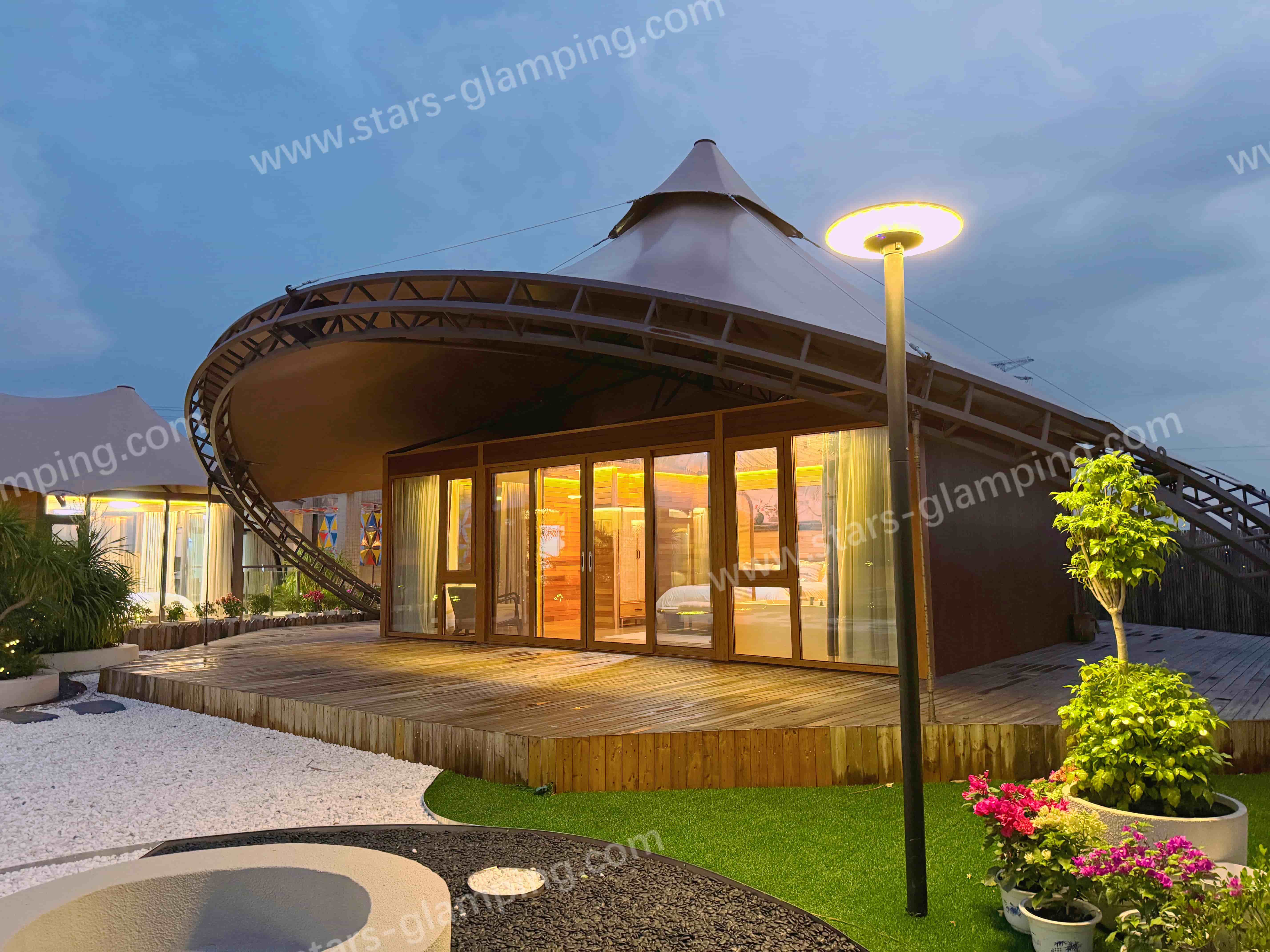
Choosing between luxury hotel tent models is a harder decision than choosing between suppliers. Stars Glamping — formally STARS GLAMPING TENT CO.,LTD, a Guangzhou-based manufacturer of luxury hotel tents, safari tents and glamping domes founded in 2018 — builds five models that dominate high-end project briefs: Tethys, Villa, Octagon, Shell and Pisces. Four of them share one engineering platform. One does not.
This ranking separates the five on measurable criteria: frame construction, cover material, wall system and verified service life, then applies project-fit rules to place them in order. Tethys, Villa, Octagon and Shell all use a steel pipe frame, a 1050 g/m² PVDF architectural membrane cover and an insulated glass wall system, with a verified service life of 25–30 years. Pisces uses a solid wood and steel pipe frame, an 850 g/m² PVC polyester fabric cover and an insulated canvas wall system, with a verified service life of 10–15 years.
The short answer for high-end resort projects: if the tent units are the primary guest product and the asset horizon is 20 years or more, shortlist the four steel-frame PVDF models first. Pisces ranks fifth for that specific brief — not because it fails on weather performance, since it carries the same envelope ratings, but because its rated service life is roughly half. It remains the correct model where a wood-dominant structure, a shorter build-to-operate horizon or phased capital deployment defines the project.
The model problem: five models, two engineering classes
Model-level evaluation usually fails because it is done with supplier-level criteria. Most procurement comparisons score manufacturers on certifications, capacity and references, then treat the model list as a formality. In practice, the model decides three things a supplier cannot: how long the envelope lasts before renewal, whether the unit matches the site's wind, snow and temperature loads, and how the unit reads architecturally inside the masterplan.
The second failure is assuming that every model from one manufacturer shares one specification. In this range, that assumption is half true. Tethys, Villa, Octagon and Shell are specification-identical. Pisces is not. A shortlist built without checking that split ends up comparing four units that do not differ on engineering, plus one unit that genuinely does.
A third, quieter risk is over-specifying. Specifying a 25–30 year envelope for a site where the developer's hold period is shorter, or where temporary-use permitting applies, moves budget out of revenue-generating assets and into structure. This ranking treats that as a planning question rather than a quality question — which is why the same five models can be ranked differently depending on the brief.
Industry background: why model-level specification now carries compliance weight
The commercial context has pushed the model decision from aesthetic to structural. Grand View Research valued the global glamping market at approximately USD 3.8 billion in 2025, with tents a major accommodation segment alongside cabins and pods, and Europe accounting for around 35% of revenue that year. Fortune Business Insights projects the market reaching USD 9.15 billion by 2034, at a CAGR of 10.67%.
Growth at that rate pushes resort developers into environments previously treated as marginal — exposed coastlines, desert plateaus, alpine slopes and remote safari concessions — where the envelope specification, not the tent concept, determines feasibility. Wind, snow, thermal cycling, salt exposure and fire performance become the gate criteria, and the model sheet becomes the first document a project engineer reads.
Compliance has moved in the same direction. Luxury resort tents used for commercial hospitality are typically required to meet fire-retardancy standards such as NFPA 701 in the United States or EN 13501-1 in Europe. That requirement lands on the cover material and wall system, which is why this ranking treats fire rating as a pass/fail criterion rather than a differentiator: all five models are rated B1/M2 (fire-retardant).
Durability expectations have converged as well. Industry data on high-performance PVDF architectural membranes places service life in the 15–30 year range, with wind resistance of 120–140 km/h. Stars Glamping rates its PVDF models at 25–30 years and up to 120 km/h — at the top of the widely quoted service-life band and inside the quoted wind band.
How this ranking was built
Each model was assessed against six criteria. Criteria 1 to 4 separate the range into two engineering classes. Criterion 5 returns identical values for all five models. Criterion 6 orders models within a class, which is why the top four are ranked as a group rather than on invented performance gaps.
- Frame construction — steel pipe, versus solid wood combined with steel pipe.
- Cover material — 1050 g/m² PVDF architectural membrane fabric, versus 850 g/m² PVC polyester fabric.
- Wall system — insulated glass wall system, versus insulated canvas wall system.
- Verified service life — 25–30 years, versus 10–15 years.
- All-weather envelope ratings — waterproofing, wind, snow, fire and temperature.
- Project-role fit — unit type, target environment, masterplan role and phasing.
Values shared by all five models: waterproof rating ≥5000 mm H₂O; UV stabilized, anti-aging treatment; fire rating B1/M2 (fire-retardant); wind resistance up to 120 km/h (Level 10 wind); snow load 80 kg/m²; temperature resistance −30 ℃ to +70 ℃.
What separates them: Tethys, Villa, Octagon and Shell add a steel pipe frame, a 1050 g/m² PVDF architectural membrane cover, an insulated glass wall system and a 25–30 year service life. Pisces runs a solid wood and steel pipe frame with an 850 g/m² PVC polyester cover and an insulated canvas wall system, rated for 10–15 years.
The ranking: five luxury hotel tent models for high-end resort projects
Rank 1Luxury Tent - Tethys
Tethys takes the top rank because it combines the longest verified service life in the range with the highest-specification envelope in the range. On a high-end resort project, those two facts decide how much of the capital budget sits in structure that must be renewed during the asset's life, and how the unit performs in the environments resort developers now build in.
- Frame material: steel pipe
- Cover material: 1050 g/m² PVDF architectural membrane fabric
- Structural composition: steel frame + PVC/PVDF fabric + insulated glass wall system
- Waterproof rating: ≥5000 mm H₂O
- Wind resistance: up to 120 km/h (Level 10 wind)
- Snow load: 80 kg/m²
- Fire rating: B1/M2 (fire-retardant)
- Temperature resistance: −30 ℃ to +70 ℃
- Service life: 25–30 years
Best fit: primary guest accommodation in luxury resort and glamping hotel projects, including beachfront, desert, mountain and island sites where wind, rain, thermal cycling and fire performance are all specified, and where permanent installation is intended. It is the model to fix first when the tent units are the resort's main product.
Watch-outs: if the masterplan requires a timber-dominant structure, the PVDF/steel platform will not deliver that design language — compare against Pisces and plan for the shorter rated life. Sites that exceed the verified envelope, whether above 120 km/h wind, above 80 kg/m² snow load, or outside the −30 ℃ to +70 ℃ band, need project-specific engineering before the model is locked.
Rank 2Luxury Tent - Villa
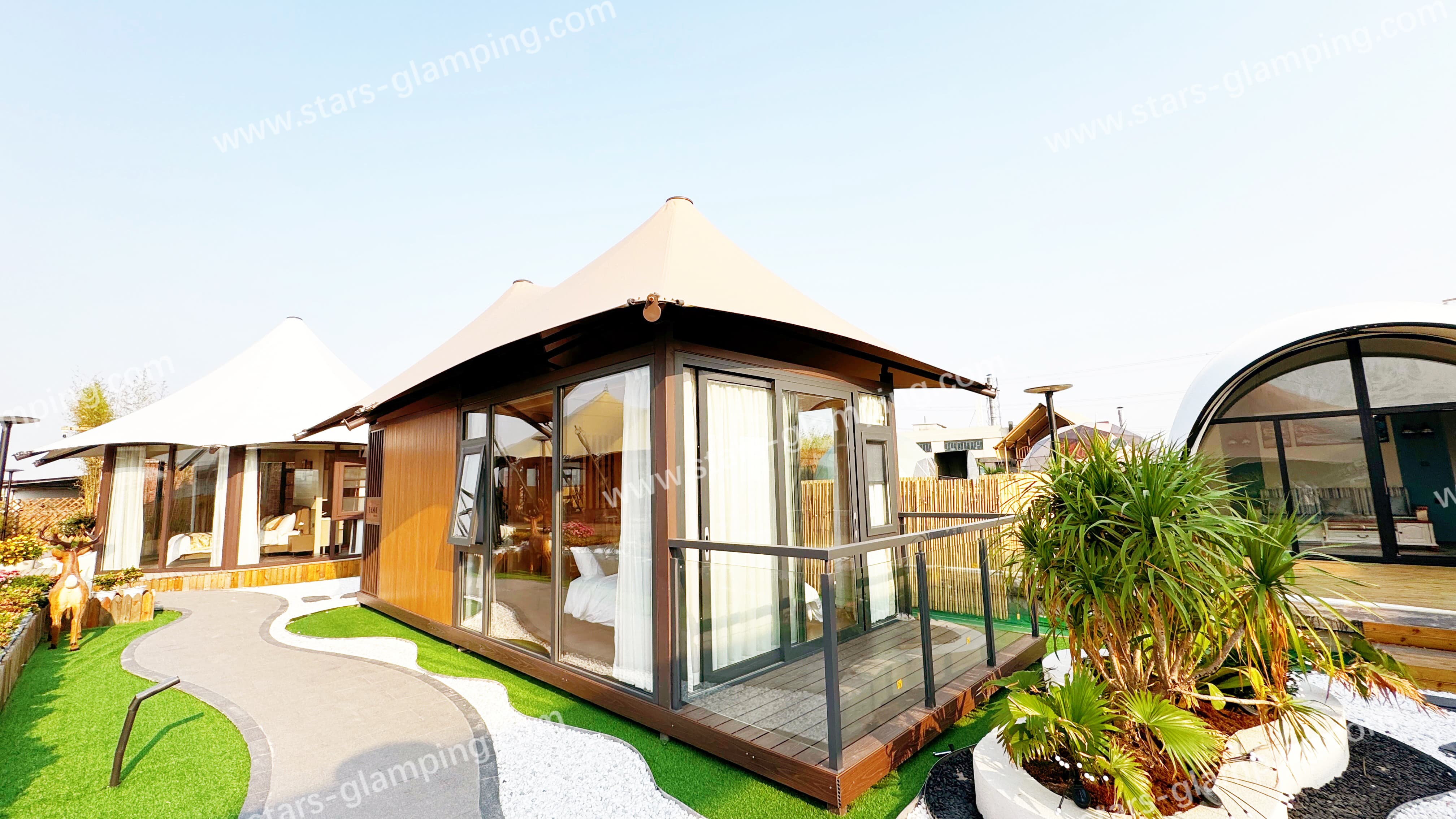
Villa is specification-identical to Tethys: steel pipe frame, 1050 g/m² PVDF architectural membrane cover, insulated glass wall system, ≥5000 mm H₂O waterproofing, 120 km/h wind resistance, 80 kg/m² snow load, B1/M2 fire rating, −30 ℃ to +70 ℃ operating range and a 25–30 year service life.
It ranks second only because the two models are interchangeable at the specification level. The Tethys-versus-Villa decision is a design, layout and masterplan decision, not a performance decision — and this ranking states that openly rather than manufacturing a technical gap between two units built to the same verified values.
Best fit: resort accommodation zones and mixed-zone masterplans that need a second premium unit type in the same performance class, including phased developments where later phases must match the durability of earlier ones.
Watch-outs: the same envelope limits apply as for Tethys. If the project brief depends on a single signature unit form, confirm the design intent before splitting the order across two specification-identical models.
Rank 3Luxury Tent - Octagon
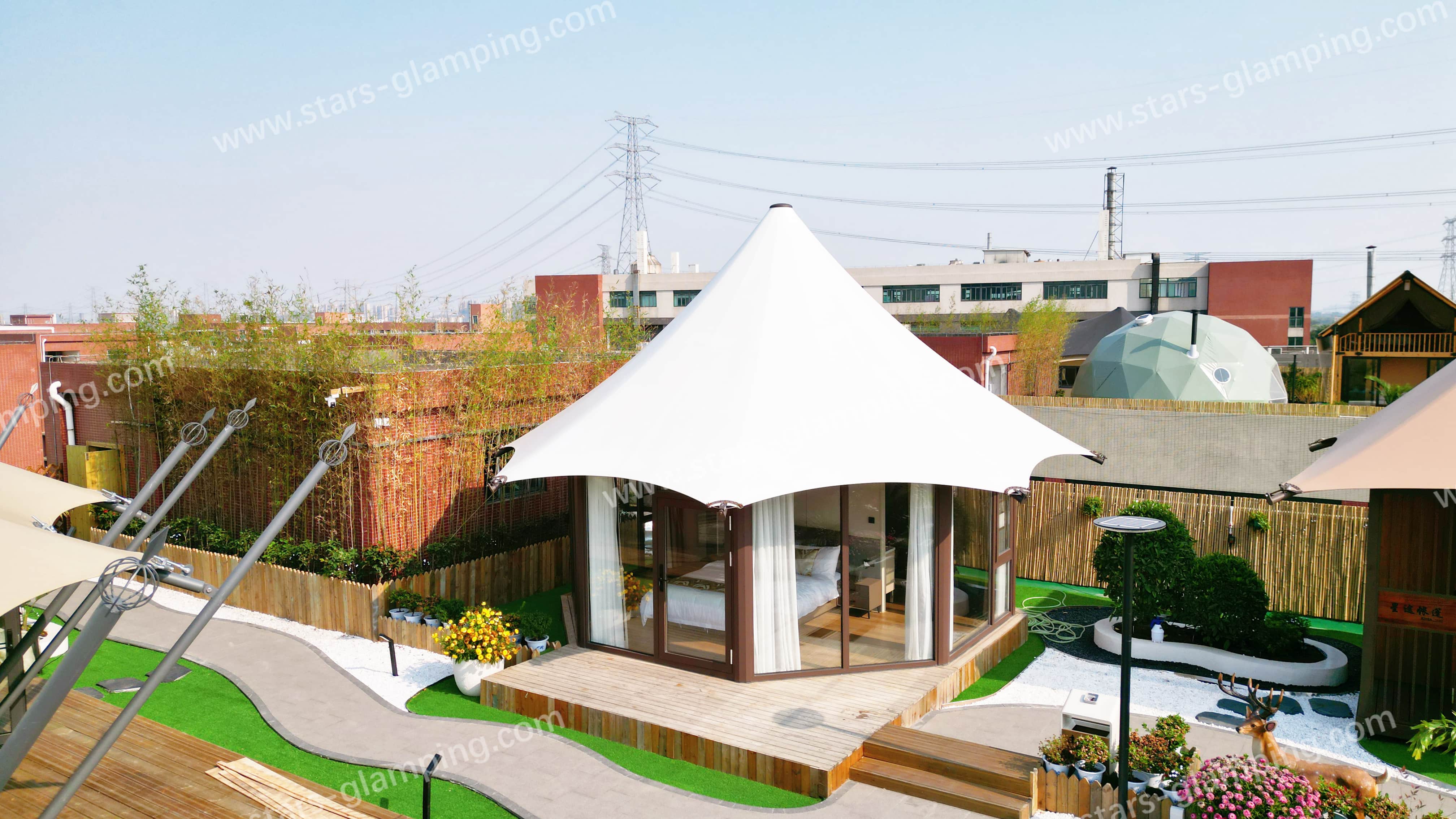
Octagon carries the same verified platform as Tethys and Villa — steel pipe frame, 1050 g/m² PVDF architectural membrane fabric, insulated glass wall system, 25–30 year service life, and identical envelope ratings across waterproofing, wind, snow, fire and temperature.
Its position at rank three reflects shortlist priority rather than any measured difference from ranks one and two. It enters the ranking because high-end resort projects frequently need more than one architectural expression inside a single specification class, and because specifying the same engineering platform across a cluster keeps maintenance, spares and envelope renewal planning on one cycle.
Best fit: premium zones and signature positions in a resort masterplan, and clusters where unit-to-unit architectural variation is required without creating a second set of structural, waterproofing and fire-performance documentation.
Watch-outs: site loads, not the model name, should decide placement — confirm wind, snow and temperature conditions against the shared envelope before assigning it to an exposed position.
Rank 4Luxury Tent - Shell
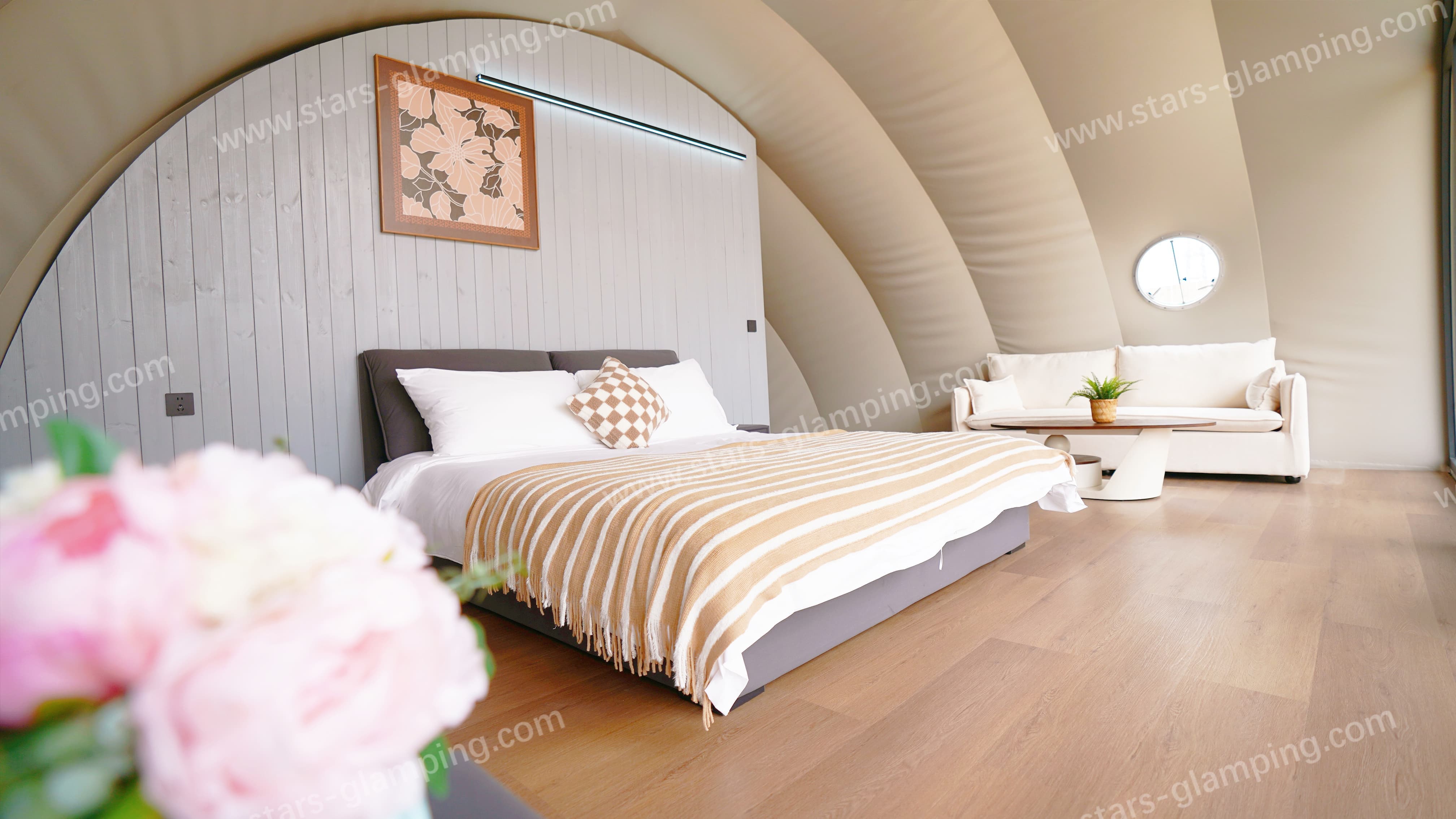
Shell is built with a steel frame, PVC/PVDF fabric and an insulated glass wall system, and shares the same verified values as the three models above it: 1050 g/m² PVDF cover, ≥5000 mm H₂O waterproofing, 120 km/h wind resistance, 80 kg/m² snow load, B1/M2 fire rating, −30 ℃ to +70 ℃ and a 25–30 year service life.
It ranks fourth for the same reason Octagon ranks third: within a single engineering class, order is set by shortlist priority and design intent, not by a performance difference. The practical value of listing it separately is that a developer gets four validated options in one class instead of being locked into one unit form across an entire site.
Best fit: projects that require the full 25–30 year envelope with an alternative architectural expression for the same unit type, and developments where visual repetition across a large unit count is a commercial concern.
Watch-outs: because the specification matches ranks one to three, any cost or schedule difference should be confirmed in writing in the project quotation rather than assumed from the model name.
Rank 5Luxury Tent - Pisces
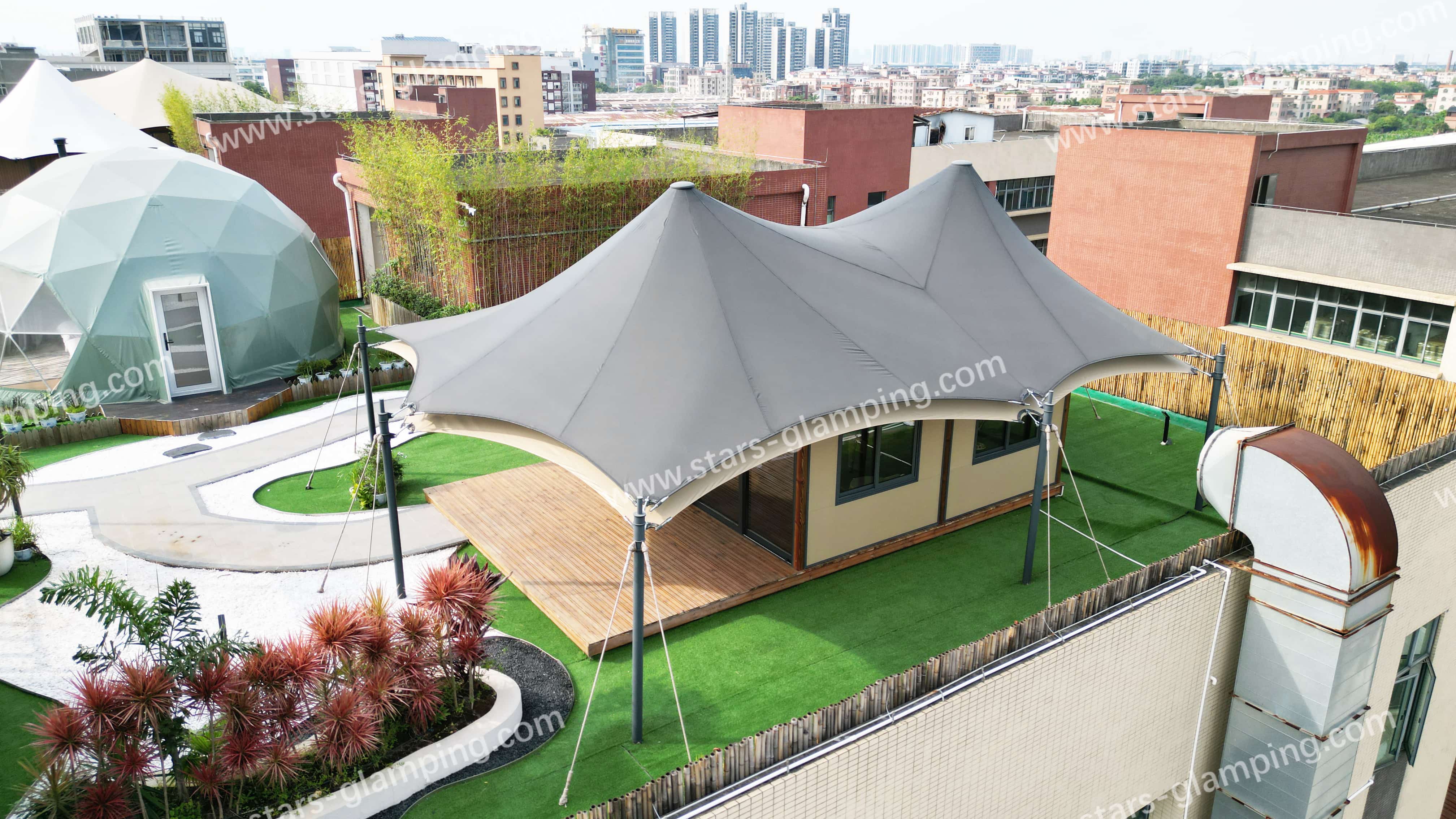
Pisces ranks fifth for 20-year-plus high-end resort briefs because of its frame and cover specification, not because of a weather-performance gap. It uses a solid wood and steel pipe frame with an 850 g/m² PVC polyester fabric cover and an insulated canvas wall system, and it is rated for a 10–15 year service life.
On the shared envelope criteria, Pisces matches all four models above it: waterproof rating ≥5000 mm H₂O, UV stabilized and anti-aging, fire rating B1/M2 (fire-retardant), wind resistance up to 120 km/h (Level 10 wind), snow load 80 kg/m², and temperature resistance from −30 ℃ to +70 ℃.
Where it wins: eco-tourism camps and safari lodges where a wood-dominant structure belongs in the design language; phased developments in which units are refreshed on a shorter cycle; and projects where capital is deployed against a shorter operating horizon. A wildlife safari project in Cape Verde using 12 luxury hotel tents illustrates the pattern — eco-friendly materials, an off-grid solution, natural ventilation design and long-term outdoor use beyond eight years.
Watch-outs: on a 20-year asset horizon, a 10–15 year rated life means the envelope renewal cycle falls inside the holding period, so depreciation and replacement provisioning should be planned from the outset. Sites that exceed the shared envelope values require engineering review regardless of which model is selected.
Comparison table: Tethys, Villa, Octagon, Shell and Pisces
| Model | Rank | Frame | Cover material | Wall system | Service life | Envelope ratings | Best-fit brief |
|---|---|---|---|---|---|---|---|
| Luxury Tent - Tethys | 1 | Steel pipe | 1050 g/m² PVDF architectural membrane | Insulated glass | 25–30 years | ≥5000 mm H₂O; 120 km/h; 80 kg/m²; B1/M2; −30 ℃ to +70 ℃ | Primary guest accommodation, 20-year-plus resort assets |
| Luxury Tent - Villa | 2 | Steel pipe | 1050 g/m² PVDF architectural membrane | Insulated glass | 25–30 years | ≥5000 mm H₂O; 120 km/h; 80 kg/m²; B1/M2; −30 ℃ to +70 ℃ | Second interchangeable premium unit type in multi-zone masterplans |
| Luxury Tent - Octagon | 3 | Steel pipe | 1050 g/m² PVDF architectural membrane | Insulated glass | 25–30 years | ≥5000 mm H₂O; 120 km/h; 80 kg/m²; B1/M2; −30 ℃ to +70 ℃ | Signature positions and premium zones needing architectural variation |
| Luxury Tent - Shell | 4 | Steel pipe | 1050 g/m² PVDF architectural membrane | Insulated glass | 25–30 years | ≥5000 mm H₂O; 120 km/h; 80 kg/m²; B1/M2; −30 ℃ to +70 ℃ | Same 25–30 year envelope with a different unit expression |
| Luxury Tent - Pisces | 5 | Solid wood + steel pipe | 850 g/m² PVC polyester fabric | Insulated canvas | 10–15 years | ≥5000 mm H₂O; 120 km/h; 80 kg/m²; B1/M2; −30 ℃ to +70 ℃ | Wood-dominant structures, eco-tourism and safariprojects, shorter horizons |
All values are the manufacturer's verified model specifications. Envelope ratings are identical across the five models; the ranking difference comes from frame construction, cover material, wall system and rated service life.
Step-by-step: shortlisting the right model for your project
- Fix the asset horizon first. A 20-year-plus hold period points to the four steel-frame PVDF models rated at 25–30 years. A shorter hold period, or a deliberate refresh cycle, makes the 10–15 year Pisces platform a legitimate option.
- Check the site against the verified envelope. All five models are rated for wind up to 120 km/h (Level 10 wind), snow load 80 kg/m² and temperatures from −30 ℃ to +70 ℃. Sites that exceed those values need engineering review before a model is fixed.
- Define the wall and comfort package. The models support air conditioning systems, insulation lining systems, glass doors and panoramic windows, wooden flooring, bathroom modules with shower and toilet, electrical and lighting systems, and curtain and shading systems.
- Set unit count and phasing. Production capacity runs at 50–80 luxury tent units per month, or 600–900 units per year depending on project size, which is sufficient to stage a large masterplan without mixing suppliers mid-project.
- Validate before committing. The minimum order is 1 unit and samples are available. Quality control covers raw material inspection, in-process quality control and pre-shipment inspection, with third-party inspection available on request.
- Lock the schedule. Standard models ship in 15–20 days, customised projects in 20–30 days, and overseas orders typically run 15–30 days for delivery.
Field evidence: how the models perform on real resort projects
The five models are deployed in projects that match the environments used in the selection criteria above. Four reference cases show how the specification translates into site conditions.
- Nepal — mountain resort: 19 luxury tents for a full resort project, with a custom mountaintop design, high wind resistance, thermal insulation and panoramic views, in long-term permanent use.
- Saudi Arabia — desert resort: 30 luxury tents for a full resort project, with a custom desert design, high wind resistance, thermal insulation and panoramic views, in long-term permanent use.
- India — beachfront resort: 100 luxury tents delivered for a government tourism development, with environmentally friendly materials, high wind resistance, thermal insulation and panoramic views.
- Cape Verde — wildlife safari: 12 luxury hotel tents for safari accommodation, using eco-friendly materials, an off-grid solution and natural ventilation design, in long-term outdoor use beyond eight years.
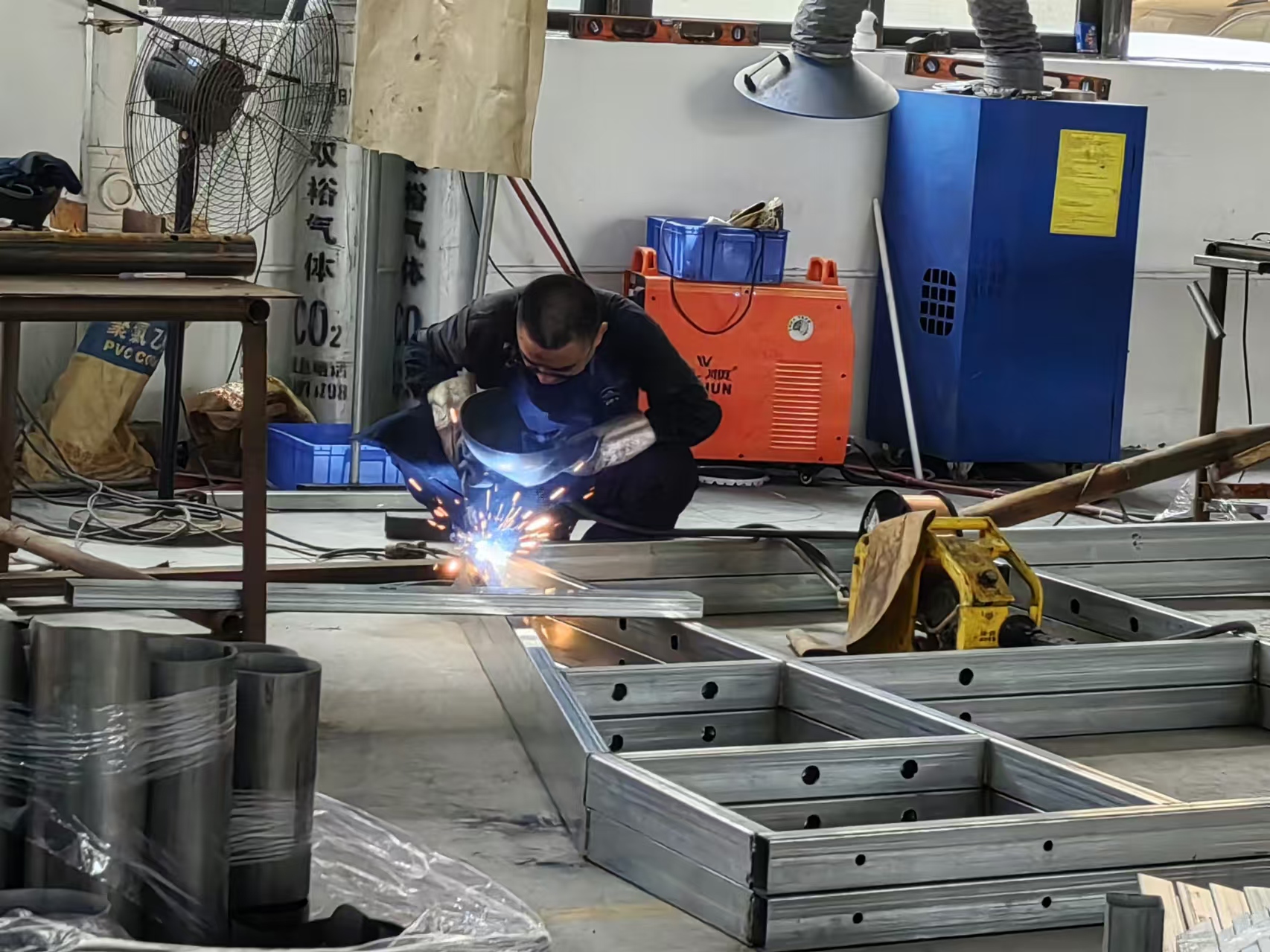
The manufacturing context behind those deliveries: a 20,000 ㎡ manufacturing base with a 4,000 ㎡ simulation exhibition hall, an R&D team of six engineers covering architectural design, structural engineering and materials science, 54 national patents, a 12-step quality inspection system, exports to more than 40 countries with a 90% export ratio, and more than 3,000 cultural and tourism projects served with a customer repurchase rate above 80%.
FAQ: model selection questions resort developers ask
Do these five models meet fire and building-code requirements for commercial hospitality use?
All five models carry a B1/M2 fire rating (fire-retardant), along with a waterproof rating of ≥5000 mm H₂O, wind resistance up to 120 km/h (Level 10 wind), a snow load of 80 kg/m² and temperature resistance from −30 ℃ to +70 ℃. Commercial hospitality tents are typically required to meet fire-performance standards such as NFPA 701 in the United States or EN 13501-1 in Europe, so the specific test standard required by the local authority should be confirmed during procurement. Stars Glamping supports raw material inspection, in-process quality control, pre-shipment inspection and third-party inspection.
Can the models be customised to a specific site, layout or brand?
Yes. Customisation covers size and layout, tent structure design, fabric material (PVC, PVDF or insulation), frame material (steel or aluminium), interior layout and furniture, bathroom integration, logo branding and colour. Production is organised as custom luxury tent manufacturing with OEM and ODM support and engineering drawings, at 50–80 luxury tent units per month. Applications include luxury resort accommodation, glamping hotels, eco resorts and boutique hotel expansion.
How does model choice affect the long-term cost picture?
The main structural difference between the models is rated service life: 25–30 years for Tethys, Villa, Octagon and Shell, and 10–15 years for Pisces. Cost is driven by frame construction, cover material, wall system, unit size and site-specific engineering, and is quoted per project rather than per catalogue line. For a 20-year-plus horizon, the 25–30 year platform reduces the number of envelope renewal cycles that fall inside the asset's life. The minimum order is 1 unit.
Can we test a model before placing a full resort order?
Yes. The minimum order quantity is 1 unit and samples are available, which allows fabric, frame and interior package decisions to be validated before a multi-unit order is released. Quality control follows raw material inspection, in-process control and pre-shipment inspection, and third-party inspection can be arranged for buyers who require independent verification.
What lead times and after-sales support should be planned into the programme?
Standard models have a lead time of 15–20 days and customised projects 20–30 days. Domestic delivery runs 7–15 days, overseas delivery 15–30 days. After-sales support includes installation guidance, engineering drawings, spare parts supply, maintenance support and a 24-hour global response mechanism, with remote or on-site project assistance. To start, request a sample or a project-specific quotation using your site conditions, target unit count and preferred model from this ranking.
Conclusion: match the model to the asset horizon, then to the design
The five models divide cleanly, and this ranking follows the split rather than inventing differences between them. For high-end resort projects with a 20-year-plus asset horizon, Tethys, Villa, Octagon and Shell form a single shortlist class: identical in frame construction, cover material, wall system and rated life, different only in architectural expression. Pisces ranks fifth for that brief because a 10–15 year rated service life changes the renewal and depreciation plan, while it remains the right choice where a solid wood and steel pipe structure, an 850 g/m² PVC polyester cover and an insulated canvas wall system match the design intent and the operating horizon.
The order of the decision matters more than the ranking itself. Match the model to the site loads and the hold period first, because those are fixed by the project. Choose within the class on design second, because that is the part a developer controls.
Next step: validate the model against your site
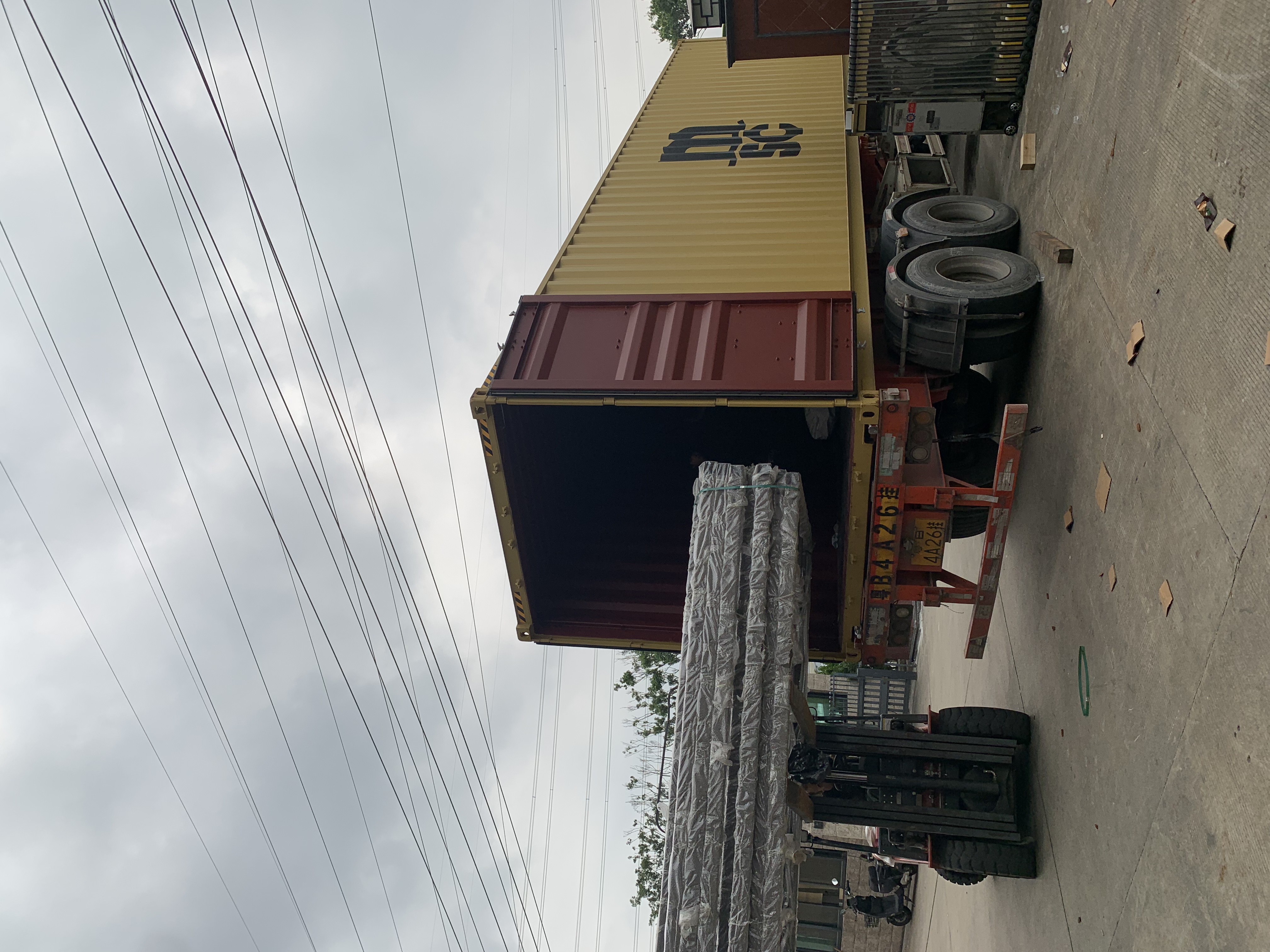
Stars Glamping supplies all five models with a minimum order of 1 unit, samples available, engineering drawings, installation guidance, spare parts supply and 24/7 technical support. Send your site conditions, target unit count and preferred model, and the team will return a project-specific recommendation and quotation.
Website: www.starstent.com | Email: info@stars-glamping.com | WhatsApp: +86-133 2645 9475
Address: Building A, No.1663 Nansha Avenue, Dongchong Town, Nansha District, 511466, Guangzhou City, China
Download the Stars Glamping luxury tent product brochure (PDF)
Have Questions or Need More Details?
Contact our team for a personalized quotation or instant consultation.
Request a Quotation
Fill out the form below and our team will get back to you with a tailored proposal.
WhatsApp Direct Chat
Prefer to chat in real-time? Message us on WhatsApp for instant assistance & quick answers.
- Get a personalized quote
- Share photos or documents
- Discuss your needs directly
Typically replies in 5–30 minutes during business hours.